
The Case of Janissary
Read The Case of Janissary by Arthur Morrison in the original English.
By Arthur Morrison
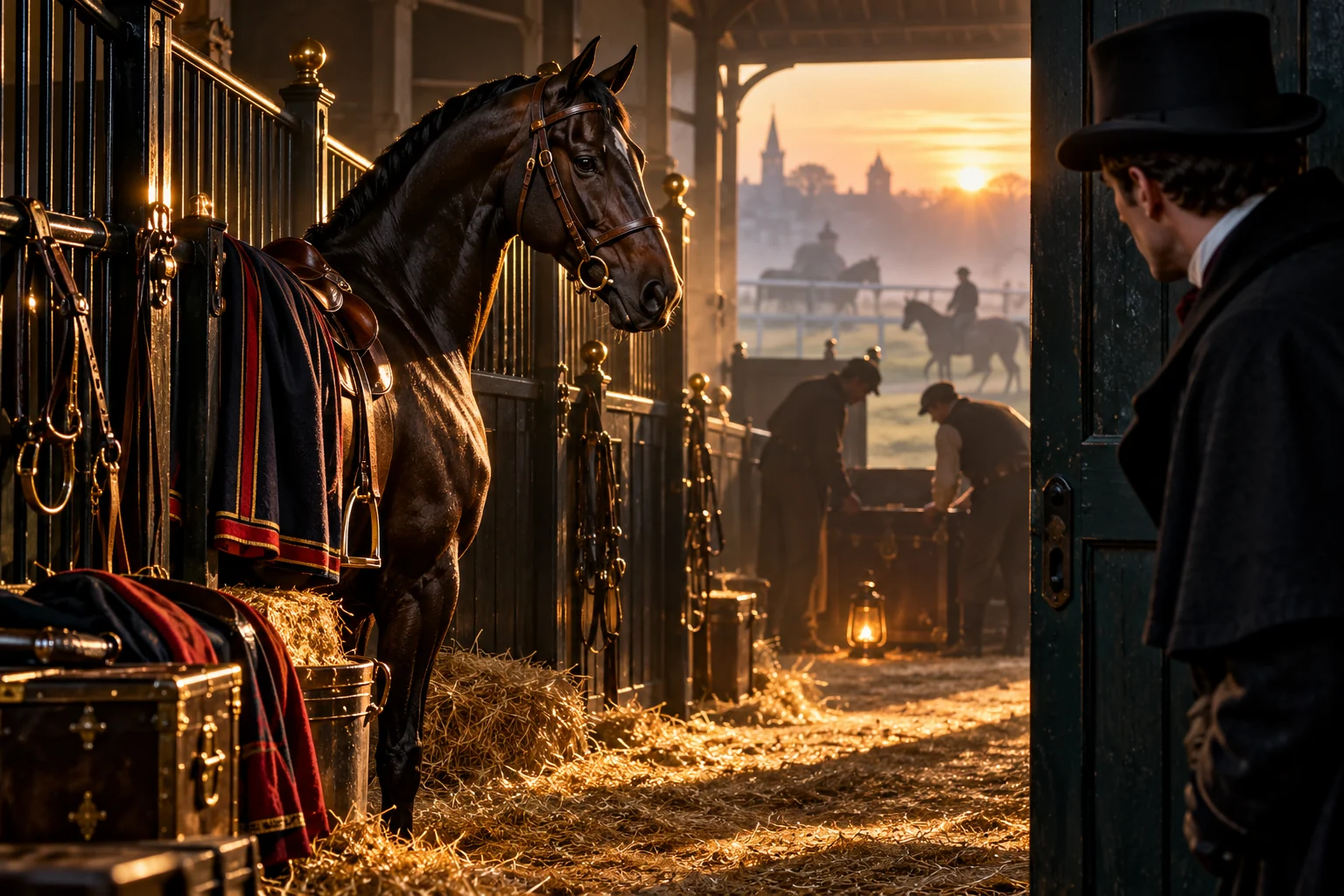
Edition: Complete story in the original English, from Project Gutenberg #53341. No translation or AI rewriting of the literary text. Original spelling retained.
This eBook is for the use of anyone anywhere in the United States and most other parts of the world at no cost and with almost no restrictions whatsoever. You may copy it, give it away or re-use it under the terms of the Project Gutenberg License included with this eBook or online at www.gutenberg.org. If you are not located in the United States, you will have to check the laws of the country where you are located before using this eBook.
I
In this case (and indeed in most of the others) the notes and other documents found in the dockets would, by themselves, give but a faint outline of the facts, and, indeed, might easily be unintelligible to many people, especially as for much of my information I have been indebted to outside inquiries. Therefore I offer no excuse for presenting the whole thing digested into plain narrative form, with little reference to my authorities. Though I knew none of the actors in it, with the exception of the astute Dorrington, the case was especially interesting to me, as will be gathered from the narrative itself.
The only paper in the bundle which I shall particularly allude to was a newspaper cutting, of a date anterior by nine or ten months to the events I am to write of. It had evidently been cut at the time it appeared, and saved, in case it might be useful, in a box in the form of a book, containing many hundreds of others. From this receptacle it had been taken, and attached to the bundle during the progress of the case. I may say at once that the facts recorded had no direct concern with the case of the horse Janissary, but had been useful in affording a suggestion to Dorrington in connection therewith. The matter is the short report of an ordinary sort of inquest, and I here transcribe it.
“Dr. McCulloch held an inquest yesterday on the body of Mr. Henry Lawrence, whose body was found on Tuesday morning last in the river near Vauxhall Bridge. The deceased was well known in certain sporting circles. Sophia Lawrence, the widow, said that deceased had left home on Monday afternoon at about five, in his usual health, saying that he was to dine at a friend’s, and she saw nothing more of him till called upon to identify the body. He had no reason for suicide, and so far as witness knew, was free from pecuniary embarrassments. He had, indeed, been very successful in betting recently. He habitually carried a large pocket-book, with papers in it. Mr. Robert Naylor, commission agent, said that deceased dined with him that evening at his house in Gold Street, Chelsea, and left for home at about half-past eleven. He had at the time a sum of nearly four hundred pounds upon him, chiefly in notes, which had been paid him by witness in settlement of a bet. It was a fine night, and deceased walked in the direction of Chelsea Embankment. That was the last witness saw of him. He might not have been perfectly sober, but he was not drunk, and was capable of taking care of himself. The evidence of the Thames police went to show that no money was on the body when found, except a few coppers, and no pocket-book. Dr. William Hodgetts said that death was due to drowning. There were some bruises on the arms and head which might have been caused before death. The body was a very healthy one. The coroner said that there seemed to be a very strong suspicion of foul play, unless the pocket-book of the deceased had got out of his pocket in the water; but the evidence was very meagre, although the police appeared to have made every possible inquiry. The jury returned a verdict of ‘Found Drowned, though how the deceased came into the water there was no evidence to show.’”
I know no more of the unfortunate man Lawrence than this, and I have only printed the cutting here because it probably induced Dorrington to take certain steps in the case I am dealing with. With that case the fate of the man Lawrence has nothing whatever to do. He passes out of the story entirely.
II
Mr. Warren Telfer was a gentleman of means, and the owner of a few–very few–racehorses. But he had a great knack of buying hidden prizes in yearlings, and what his stable lacked in quantity it often more than made up for in quality. Thus he had once bought a St. Leger winner for as little as a hundred and fifty pounds. Many will remember his bitter disappointment of ten or a dozen years back, when his horse, Matfelon, starting an odds-on favourite for the Two Thousand, never even got among the crowd, and ambled in streets behind everything. It was freely rumoured (and no doubt with cause) that Matfelon had been “got at” and in some way “nobbled.” There were hints of a certain bucket of water administered just before the race–a bucket of water observed in the hands, some said of one, some said of another person connected with Ritter’s training establishment. There was no suspicion of pulling, for plainly the jockey was doing his best with the animal all the way along, and never had a tight rein. So a nobbling it must have been, said the knowing ones, and Mr. Warren Telfer said so too, with much bitterness. More, he immediately removed his horses from Ritter’s stables, and started a small training place of his own for his own horses merely; putting an old steeplechase jockey in charge, who had come out of a bad accident permanently lame, and had fallen on evil days.
The owner was an impulsive and violent-tempered man, who, once a notion was in his head, held to it through everything, and in spite of everything. His misfortune with Matfelon made him the most insanely distrustful man alive. In everything he fancied he saw a trick, and to him every man seemed a scoundrel. He could scarce bear to let the very stable-boys touch his horses, and although for years all went as well as could be expected in his stables, his suspicious distrust lost nothing of its virulence. He was perpetually fussing about the stables, making surprise visits, and laying futile traps that convicted nobody. The sole tangible result of this behaviour was a violent quarrel between Mr. Warren Telfer and his nephew Richard, who had been making a lengthened stay with his uncle. Young Telfer, to tell the truth, was neither so discreet nor so exemplary in behaviour as he might have been, but his temper was that characteristic of the family, and when he conceived that his uncle had an idea that he was communicating stable secrets to friends outside, there was an animated row, and the nephew betook himself and his luggage somewhere else. Young Telfer always insisted, however, that his uncle was not a bad fellow on the whole, though he had habits of thought and conduct that made him altogether intolerable at times. But the uncle had no good word for his graceless nephew; and indeed Richard Telfer betted more than he could afford, and was not so particular in his choice of sporting acquaintances as a gentleman should have been.
Mr. Warren Telfer’s house, “Blackhall,” and his stables were little more than two miles from Redbury, in Hampshire; and after the quarrel Mr. Richard Telfer was not seen near the place for many months–not, indeed, till excitement was high over the forthcoming race for the Redbury Stakes, for which there was an entry from the stable–Janissary, for long ranked second favourite; and then the owner’s nephew did not enter the premises, and, in fact, made his visit as secret as possible.
I have said that Janissary was long ranked second favourite for the Redbury Stakes, but a little more than a week before the race he became first favourite, owing to a training mishap to the horse fancied first, which made its chances so poor that it might have been scratched at any moment. And so far was Janissary above the class of the field (though it was a two-year-old race, and there might be a surprise) that it at once went to far shorter odds than the previous favourite, which, indeed, had it run fit and well, would have found Janissary no easy colt to beat.
Mr. Telfer’s nephew was seen near the stables but two or three days before the race, and that day the owner despatched a telegram to the firm of Dorrington & Hicks. In response to this telegram, Dorrington caught the first available train for Redbury, and was with Mr. Warren Telfer in his library by five in the afternoon.
“It is about my horse Janissary that I want to consult you, Mr. Dorrington,” said Mr. Telfer. “It’s right enough now–or at least was right at exercise this morning–but I feel certain that there’s some diabolical plot on hand somewhere to interfere with the horse before the Redbury Stakes day, and I’m sorry to have to say that I suspect my own nephew to be mixed up in it in some way. In the first place I may tell you that there is no doubt whatever that the colt, if let alone, and bar accident, can win in a canter. He could have won even if Herald, the late favourite, had kept well, for I can tell you that Janissary is a far greater horse than anybody is aware of outside my establishment–or at any rate, than anybody ought to be aware of, if the stable secrets are properly kept. His pedigree is nothing very great, and he never showed his quality till quite lately, in private trials. Of course it has leaked out somehow that the colt is exceptionally good–I don’t believe I can trust a soul in the place. How should the price have gone up to five to four unless somebody had been telling what he’s paid not to tell? But that isn’t all, as I have said. I’ve a conviction that something’s on foot–somebody wants to interfere with the horse. Of course we get a tout about now and again, but the downs are pretty big, and we generally manage to dodge them if we want to. On the last three or four mornings, however, wherever Janissary might be taking his gallop, there was a big, hulking fellow, with a red beard and spectacles–not so much watching the horse as trying to get hold of the lad. I am always up and out at five, for I’ve found to my cost–you remember about Matfelon–that if a man doesn’t want to be ramped he must never take his eye off things. Well, I have scarcely seen the lad ease the colt once on the last three or four mornings without that red-bearded fellow bobbing up from a knoll, or a clump of bushes, or something, close by–especially if Janissary was a bit away from the other horses, and not under my nose, or the head lad’s, for a moment. I rode at the fellow, of course, when I saw what he was after, but he was artful as a cartload of monkeys, and vanished somehow before I could get near him. The head lad believes he has seen him about just after dark, too; but I am keeping the stable lads in when they’re not riding, and I suppose he finds he has no chance of getting at them except when they’re out with the horses. This morning, not only did I see this fellow about, as usual, but, I am ashamed to say, I observed my own nephew acting the part of a common tout. He certainly had the decency to avoid me and clear out, but that was not all, as you shall see. This morning, happening to approach the stables from the back, I suddenly came upon the red-bearded man–giving money to a groom of mine! He ran off at once, as you may guess, and I discharged the groom where he stood, and would not allow him into the stables again. He offered no explanation or excuse, but took himself off, and half an hour afterward I almost sent away my head boy too. For when I told him of the dismissal, he admitted that he had seen that same groom taking money of my nephew at the back of the stables, an hour before, and had not informed me! He said that he thought that as it was ‘only Mr. Richard’ it didn’t matter. Fool! Anyway, the groom has gone, and, so far as I can tell as yet, the colt is all right. I examined him at once, of course; and I also turned over a box that Weeks, the groom, used to keep brushes and odd things in. There I found this paper full of powder. I don’t yet know what it is, but it’s certainly nothing he had any business with in the stable. Will you take it?
“And now,” Mr. Telfer went on, “I’m in such an uneasy state that I want your advice and assistance. Quite apart from the suspicious–more than suspicious–circumstances I have informed you of, I am certain–I know it without being able to give precise reasons–I am certain that some attempt is being made at disabling Janissary before Thursday’s race. I feel it in my bones, so to speak. I had the same suspicion just before that Two Thousand, when Matfelon was got at. The thing was in the air, as it is now. Perhaps it’s a sort of instinct; but I rather think it is the result of an unconscious absorption of a number of little indications about me. Be it as it may, I am resolved to leave no opening to the enemy if I can help it, and I want you to see if you can suggest any further precautions beyond those I am taking. Come and look at the stables.”
Dorrington could see no opening for any piece of rascality by which he might make more of the case than by serving his client loyally, so he resolved to do the latter. He followed Mr. Telfer through the training stables, where eight or nine thoroughbreds stood, and could suggest no improvement upon the exceptional precautions that already existed.
“No,” said Dorrington, “I don’t think you can do any better than this–at least on this, the inner line of defence. But it is best to make the outer lines secure first. By the way, this isn’t Janissary, is it? We saw him farther up the row, didn’t we?”
“Oh no, that’s a very different sort of colt, though he does look like, doesn’t he? People who’ve been up and down the stables once or twice often confuse them. They’re both bays, much of a build, and about the same height, and both have a bit of stocking on the same leg, though Janissary’s is bigger, and this animal has a white star. But you never saw two creatures look so like and run so differently. This is a dead loss–not worth his feed. If I can manage to wind him up to something like a gallop I shall try to work him off in a selling plate somewhere; but as far as I can see he isn’t good enough even for that. He’s a disappointment. And his stock’s far better than Janissary’s too, and he cost half as much again! Yearlings are a lottery. Still, I’ve drawn a prize or two among them, at one time or another.”
“Ah yes, so I’ve heard. But now as to the outer defences I was speaking of. Let us find out who is trying to interfere with your horse. Do you mind letting me into the secrets of the stable commissions?”
“Oh no. We’re talking in confidence, of course. I’ve backed the colt pretty heavily all round, but not too much anywhere. There’s a good slice with Barker–you know Barker, of course; Mullins has a thousand down for him, and that was at five to one, before Herald went amiss. Then there’s Ford and Lascelles–both good men, and Naylor–he’s the smallest man of them all, and there’s only a hundred or two with him, though he’s been laying the horse pretty freely everywhere, at least until Herald went wrong. And there’s Pedder. But there must have been a deal of money laid to outside backers, and there’s no telling who may contemplate a ramp.”
“Just so. Now as to your nephew. What of your suspicions in that direction?”
“Perhaps I’m a little hasty as to that,” Mr. Telfer answered, a little ashamed of what he had previously said. “But I’m worried and mystified, as you see, and hardly know what to think. My nephew Richard is a little erratic, and he has a foolish habit of betting more than he can afford. He and I quarrelled some time back, while he was staying here, because I had an idea that he had been talking too freely outside. He had, in fact; and I regarded it as a breach of confidence. So there was a quarrel and he went away.”
“Very well. I wonder if I can get a bed at the ‘Crown,’ at Redbury? I’m afraid it’ll be crowded, but I’ll try.”
“But why trouble? Why not stay with me, and be near the stables?”
“Because then I should be of no more use to you than one of your lads. People who come out here every morning are probably staying at Redbury, and I must go there after them.”
III
The “Crown” at Redbury was full in anticipation of the races, but Dorrington managed to get a room ordinarily occupied by one of the landlord’s family, who undertook to sleep at a friend’s for a night or two. This settled, he strolled into the yard, and soon fell into animated talk with the hostler on the subject of the forthcoming races. All the town was backing Janissary for the Stakes, the hostler said, and he advised Dorrington to do the same.
During this conversation two men stopped in the street, just outside the yard gate, talking. One was a big, heavy, vulgar-looking fellow in a box-cloth coat, and with a shaven face and hoarse voice; the other was a slighter, slimmer, younger and more gentlemanlike man, though there was a certain patchy colour about his face that seemed to hint of anything but teetotalism.
“There,” said the hostler, indicating the younger of these two men, “that’s young Mr. Telfer, him as whose uncle’s owner o’ Janissary. He’s a young plunger, he is, and he’s on Janissary too. He give me the tip, straight, this mornin’. ‘You put your little bit on my uncle’s colt,’ he said. ‘It’s all right. I ain’t such pals with the old man as I was, but I’ve got the tip that his money’s down on it. So don’t neglect your opportunities, Thomas,’ he says; and I haven’t. He’s stoppin’ in our house, is young Mr. Richard.”
“And who is that he is talking to? A bookmaker?”
“Yes, sir, that’s Naylor–Bob Naylor. He’s got Mr. Richard’s bets. P’raps he’s puttin’ on a bit more now.”
The men at the gate separated, and the bookmaker walked off down the street in the fast gathering dusk. Richard Telfer, however, entered the house, and Dorrington followed him. Telfer mounted the stairs and went into his room. Dorrington lingered a moment on the stairs and then went and knocked at Telfer’s door.
“Hullo!” cried Telfer, coming to the door and peering out into the gloomy corridor.
“I beg pardon,” Dorrington replied courteously. “I thought this was Naylor’s room.”
“No–it’s No. 23, by the end. But I believe he’s just gone down the street.”
Dorrington expressed his thanks and went to his own room. He took one or two small instruments from his bag and hurried stealthily to the door of No. 23.
All was quiet, and the door opened at once to Dorrington’s picklock, for there was nothing but the common tumbler rim-lock to secure it. Dorrington, being altogether an unscrupulous scoundrel, would have thought nothing of entering a man’s room thus for purposes of mere robbery. Much less scruple had he in doing so in the present circumstances. He lit the candle in a little pocket lantern, and, having secured the door, looked quickly about the room. There was nothing unusual to attract his attention, and he turned to two bags lying near the dressing-table. One was the usual bookmaker’s satchel, and the other was a leather travelling-bag; both were locked. Dorrington unbuckled the straps of the large bag, and produced a slender picklock of steel wire, with a sliding joint, which, with a little skilful “humouring,” turned the lock in the course of a minute or two. One glance inside was enough. There on the top lay a large false beard of strong red, and upon the shirts below was a pair of spectacles. But Dorrington went farther, and felt carefully below the linen till his hand met a small, flat, mahogany box. This he withdrew and opened. Within, on a velvet lining, lay a small silver instrument resembling a syringe. He shut and replaced the box, and, having rearranged the contents of the bag, shut, locked and strapped it, and blew out his light. He had found what he came to look for. In another minute Mr. Bob Naylor’s door was locked behind him, and Dorrington took his picklocks to his own room.
It was a noisy evening in the Commercial Room at the “Crown.” Chaff and laughter flew thick, and Richard Telfer threatened Naylor with a terrible settling day. More was drunk than thirst strictly justified, and everybody grew friendly with everybody else. Dorrington, sober and keenly alert, affected the reverse, and exhibited especial and extreme affection for Mr. Bob Naylor. His advances were unsuccessful at first, but Dorrington’s manner and the “Crown” whisky overcame the bookmaker’s reserve, and at about eleven o’clock the two left the house arm in arm for a cooling stroll in the High Street. Dorrington blabbed and chattered with great success, and soon began about Janissary.
“So you’ve pretty well done all you want with Janissary, eh? Book full? Ah! nothing like keeping a book even all round–it’s the safest way–‘specially with such a colt as Janissary about. Eh, my boy?” He nudged Naylor genially. “Ah! no doubt it’s a good colt, but old Telfer has rum notions about preparation, hasn’t he?”
“I dunno,” replied Naylor. “How do you mean?”
“Why, what does he have the horse led up and down behind the stable for, half an hour every afternoon?”
“Didn’t know he did.”
“Ah! but he does. I came across it only this afternoon. I was coming over the downs, and just as I got round behind Telfer’s stables there I saw a fine bay colt, with a white stocking on the off hind leg, well covered up in a suit of clothes, being led up and down by a lad, like a sentry–up and down, up and down–about twenty yards each way, and nobody else about. ‘Hullo!’ says I to the lad, ‘hullo! what horse is this?’ ‘Janissary,’ says the boy–pretty free for a stable-lad. ‘Ah!’ says I. ‘And what are you walking him like that for?’ ‘Dunno,’ says the boy, ‘but it’s guv’nor’s orders. Every afternoon, at two to the minute, I have to bring him out here and walk him like this for half an hour exactly, neither more nor less, and then he goes in and has a handful of malt. But I dunno why.’ ‘Well,’ says I, ‘I never heard of that being done before. But he’s a fine colt,’ and I put my hand under the cloth and felt him–hard as nails and smooth as silk.”
“And the boy let you touch him?”
“Yes; he struck me as a bit easy for a stable-boy. But it’s an odd trick, isn’t it, that of the half-hour’s walk and the handful of malt? Never hear of anybody else doing it, did you?”
“No, I never did.”
They talked and strolled for another quarter of an hour, and then finished up with one more drink.
IV
The next was the day before the race, and in the morning Dorrington, making a circuit, came to Mr. Warren Telfer’s from the farther side. As soon as they were assured of privacy: “Have you seen the man with the red beard this morning?” asked Dorrington.
“No; I looked out pretty sharply, too.”
“That’s right. If you like to fall in with my suggestions, however, you shall see him at about two o’clock, and take a handsome rise out of him.”
“Very well,” Mr. Telfer replied. “What’s your suggestion?”
“I’ll tell you. In the first place, what’s the value of that other horse that looks so like Janissary?”
“Hamid is his name. He’s worth–well, what he will fetch. I’ll sell him for fifty and be glad of the chance.”
“Very good. Then you’ll no doubt be glad to risk his health temporarily to make sure of the Redbury Stakes, and to get longer prices for anything you may like to put on between now and to-morrow afternoon. Come to the stables and I’ll tell you. But first, is there a place where we may command a view of the ground behind the stables without being seen?”
“Yes, there’s a ventilation grating at the back of each stall.”
“Good! Then we’ll watch from Hamid’s stall, which will be empty. Select your most wooden-faced and most careful boy, and send him out behind the stable with Hamid at two o’clock to the moment. Put the horse in a full suit of clothes–it is necessary to cover up that white star–and tell the lad he must lead it up and down slowly for twenty yards or so. I rather expect the red-bearded man will be coming along between two o’clock and half-past two. You will understand that Hamid is to be Janissary for the occasion. You must drill your boy to appear a bit of a fool, and to overcome his stable education sufficiently to chatter freely–so long as it is the proper chatter. The man may ask the horse’s name, or he may not. Any way, the boy mustn’t forget it is Janissary he is leading. You have an odd fad, you must know (and the boy must know it too) in the matter of training. This ridiculous fad is to have your colt walked up and down for half an hour exactly at two o’clock every afternoon, and then given a handful of malt as he comes in. The boy can talk as freely about this as he pleases, and also about the colt’s chances, and anything else he likes; and he is to let the stranger come up, talk to the horse, pat him–in short, to do as he pleases. Is that plain?”
“Perfectly. You have found out something about this red-bearded chap then?”
“Oh, yes–it’s Naylor the bookmaker, as a matter of fact, with a false beard.”
“What! Naylor?”
“Yes. You see the idea, of course. Once Naylor thinks he has nobbled the favourite he will lay it to any extent, and the odds will get longer. Then you can make him pay for his little games.”
“Well, yes, of course. Though I wouldn’t put too much with Naylor in any case. He’s not a big man, and he might break and lose me the lot. But I can get it out of the others.”
“Just so. You’d better see about schooling your boy now, I think. I’ll tell you more presently.”
A minute or two before two o’clock Dorrington and Telfer, mounted on a pair of steps, were gazing through the ventilation grating of Hamid’s stall, while the colt, clothed completely, was led round. Then Dorrington described his operations of the previous evening.
“No matter what he may think of my tale,” he said, “Naylor will be pretty sure to come. He has tried to bribe your stablemen, and has been baffled. Every attempt to get hold of the boy in charge of Janissary has failed, and he will be glad to clutch at any shadow of a chance to save his money now. Once he is here, and the favourite apparently at his mercy, the thing is done. By the way, I expect your nephew’s little present to the man you sacked was a fairly innocent one. No doubt he merely asked the man whether Janissary was keeping well, and was thought good enough to win, for I find he is backing it pretty heavily. Naylor came afterwards, with much less innocent intentions, but fortunately you were down on him in time. Several considerations induced me to go to Naylor’s room. In the first place, I have heard rather shady tales of his doings on one or two occasions, and he did not seem a sufficiently big man to stand to lose a great deal over your horse. Then, when I saw him, I observed that his figure bore a considerable resemblance to that of the man you had described, except as regards the red beard and the spectacles–articles easily enough assumed, and, indeed, often enough used by the scum of the ring whose trade is welshing. And, apart from these considerations, here, at any rate, was one man who had an interest in keeping your colt from winning, and here was his room waiting for me to explore. So I explored it, and the card turned up trumps.”
As he was speaking, the stable-boy, a stolid-looking youngster, was leading Hamid back and forth on the turf before their eyes.
“There’s somebody,” said Dorrington suddenly, “over in that clump of trees. Yes–our man, sure enough. I felt pretty sure of him after you had told me that he hadn’t thought it worth while to turn up this morning. Here he comes.”
Naylor, with his red beard sticking out over the collar of his big coat, came slouching along with an awkwardly assumed air of carelessness and absence of mind.
“Hullo!” he said suddenly, as he came abreast of the horse, turning as though but now aware of its presence, “that’s a valuable sort of horse, ain’t it, my lad?”
“Yes,” said the boy, “it is. He’s goin’ to win the Redbury Stakes to-morrow. It’s Janissary.”
“Oh! Janey Sairey, is it?” Naylor answered, with a quaint affectation of gaping ignorance. “Janey Sairey, eh? Well, she do look a fine ‘orse, what I can see of ’er. What a suit o’ clo’es! An’ so she’s one o’ the ‘orses that runs in races, is she? Well, I never! Pretty much like other ‘orses, too, to look at, ain’t she? Only a bit thin in the legs.”
The boy stood carelessly by the colt’s side, and the man approached. His hand came quickly from an inner pocket, and then he passed it under Hamid’s cloths, near the shoulder. “Ah, it do feel a lovely skin, to be sure!” he said. “An’ so there’s goin’ to be races at Redbury to-morrow, is there? I dunno anythin’ about races myself, an’—-Oo my!”
Naylor sprang back as the horse, flinging back its ears, started suddenly, swung round, and reared. “Lor,” he said, “what a vicious brute! Jist because I stroked her! I’ll be careful about touching racehorses again.” His hand passed stealthily to the pocket again, and he hurried on his way, while the stable-boy steadied and soothed Hamid.
[Illustration: “THE HORSE STARTED SUDDENLY, SWUNG ROUND, AND REARED.”]
Telfer and Dorrington sniggered quietly in their concealment. “He’s taken a deal of trouble, hasn’t he?” Dorrington remarked. “It’s a sad case of the biter bit for Mr. Naylor, I’m afraid. That was a prick the colt felt–hypodermic injection with the syringe I saw in the bag, no doubt. The boy won’t be such a fool as to come in again at once, will he? If Naylor’s taking a look back from anywhere, that may make him suspicious.”
“No fear. I’ve told him to keep out for the half-hour, and he’ll do it. Dear, dear, what an innocent person Mr. Bob Naylor is! ‘Well, I never! Pretty much like other horses!’ He didn’t know there were to be races at Redbury! ‘Janey Sairey,’ too–it’s really very funny!”
Ere the half-hour was quite over, Hamid came stumbling and dragging into the stable yard, plainly all amiss, and collapsed on his litter as soon as he gained his stall. There he lay, shivering and drowsy.
“I expect he’ll get over it in a day or two,” Dorrington remarked. “I don’t suppose a vet. could do much for him just now, except, perhaps, give him a drench and let him take a rest. Certainly, the effect will last over to-morrow. That’s what it is calculated for.”
V
The Redbury Stakes were run at three in the afternoon, after two or three minor events had been disposed of. The betting had undergone considerable fluctuations during the morning, but in general it ruled heavily against Janissary. The story had got about, too, that Mr. Warren Telfer’s colt would not start. So that when the numbers went up, and it was seen that Janissary was starting after all, there was much astonishment, and a good deal of uneasiness in the ring.
“It’s a pity we can’t see our friend Naylor’s face just now, isn’t it?” Dorrington remarked to his client, as they looked on from Mr. Telfer’s drag.
“Yes; it would be interesting,” Telfer replied. “He was quite confident last night, you say.”
“Quite. I tested him by an offer of a small bet on your colt, asking some points over the odds, and he took it at once. Indeed, I believe he has been going about gathering up all the wagers he could about Janissary, and the market has felt it. Your nephew has risked some more with him, I believe, and altogether it looks as though the town would spoil the ‘bookies’ badly.”
As the horses came from the weighing enclosure, Janissary was seen conspicuous among them, bright, clean, and firm, and a good many faces lengthened at the sight. The start was not so good as it might have been, but the favourite (the starting-price had gone to evens) was not left, and got away well in the crowd of ten starters. There he lay till rounding the bend, when the Telfer blue and chocolate was seen among the foremost, and near the rails. Mr. Telfer almost trembled as he watched through his glasses.
“Hang that Willett!” he said, almost to himself. “He’s too clever against those rails before getting clear. All right, though, all right! He’s coming!”
[Illustration: “CAME IN THREE LENGTHS THE WINNER.”]
Janissary, indeed, was showing in front, and as the horses came along the straight it was plain that Mr. Telfer’s colt was holding the field comfortably. There were changes in the crowd; some dropped away, some came out and attempted to challenge for the lead, but the favourite, striding easily, was never seriously threatened, and in the end, being a little let out, came in a three-lengths winner, never once having been made to show his best.
“I congratulate you, Mr. Telfer,” said Dorrington, “and you may congratulate me.”
“Certainly, certainly,” said Mr. Telfer hastily, hurrying off to lead in the winner.
It was a bad race for the ring, and in the open parts of the course many a humble fielder grabbed his satchel ere the shouting was over, and made his best pace for the horizon; and more than one pair of false whiskers, as red as Naylor’s, came off suddenly while the owner betook himself to a fresh stand. Unless a good many outsiders sailed home before the end of the week there would be a bad Monday for layers. But all sporting Redbury was jubilant. They had all been “on” the local favourite for the local race, and it had won.
VI
Mr. Bob Naylor “got a bit back,” in his own phrase, on other races by the end of the week, but all the same he saw a black settling day ahead. He had been done–done for a certainty. He had realised this as soon as he saw the numbers go up for the Redbury Stakes. Janissary had not been drugged after all. That meant that another horse had been substituted for him, and that the whole thing was an elaborate plant. He thought he knew Janissary pretty well by sight, too, and rather prided himself on having an eye for a horse. But clearly it was a plant–a complete do. Telfer was in it, and so of course was that gentlemanly stranger who had strolled along Redbury High Street with him that night, telling that cock-and-bull story about the afternoon walks and the handful of malt. There was a nice schoolboy tale to take in a man who thought himself broad as Cheapside! He cursed himself high and low. To be done, and to know it, was a galling thing, but this would be worse. The tale would get about. They would boast of a clever stroke like that, and that would injure him with everybody; with honest men, because his reputation, as it was, would bear no worsening, and with knaves like himself, because they would laugh at him, and leave him out when any little co-operative swindle was in contemplation. But though the chagrin of the defeat was bitter bad enough, his losses were worse. He had taken everything offered on Janissary after he had nobbled the wrong horse, and had given almost any odds demanded. Do as he might, he could see nothing but a balance against him on Monday, which, though he might pay out his last cent, he could not cover by several hundred pounds.
But on the day he met his customers at his club, as usual, and paid out freely. Young Richard Telfer, however, with whom he was heavily “in,” he put off till the evening. “I’ve been a bit disappointed this morning over some ready that was to be paid over,” he said, “and I’ve used the last cheque-form in my book. You might come and have a bit of dinner with me to-night, Mr. Telfer, and take it then.”
Telfer assented without difficulty.
“All right, then, that’s settled. You know the place–Gold Street. Seven sharp. The missis ’ll be pleased to see you, I’m sure, Mr. Telfer. Let’s see–it’s fifteen hundred and thirty altogether, isn’t it?”
“Yes, that’s it. I’ll come.”
Young Telfer left the club, and at the corner of the street ran against Dorrington. Telfer, of course, knew him but as his late fellow-guest at the “Crown” at Redbury, and this was their first meeting in London after their return from the races.
“Ah!” said Telfer. “Going to draw a bit of Janissary money, eh?”
“Oh, I haven’t much to draw,” Dorrington answered. “But I expect your pockets are pretty heavy, if you’ve just come from Naylor.”
“Yes, I’ve just come from Naylor, but I haven’t touched the merry sovs. just yet,” replied Telfer cheerfully. “There’s been a run on Naylor, and I’m going to dine with him and his respectable missis this evening, and draw the plunder then. I feel rather curious to see what sort of establishment a man like Naylor keeps going. His place is in Gold Street, Chelsea.”
“Yes, I believe so. Anyhow, I congratulate you on your haul, and wish you a merry evening.” And the two men parted.
Dorrington had, indeed, a few pounds to draw as the result of his “fishing” bet with Naylor, but now he resolved to ask for the money at his own time. This invitation to Telfer took his attention, and it reminded him oddly of the circumstances detailed in the report of the inquest on Lawrence, transcribed at the beginning of this paper. He had cut out this report at the time it appeared, because he saw certain singularities about the case, and he had filed it, as he had done hundreds of other such cuttings. And now certain things led him to fancy that he might be much interested to observe the proceedings at Naylor’s house on the evening after a bad settling-day. He resolved to gratify himself with a strict professional watch in Gold Street that evening, on chance of something coming of it. For it was an important thing in Dorrington’s rascally trade to get hold of as much of other people’s private business as possible, and to know exactly in what cupboard to find every man’s skeleton. For there was no knowing but it might be turned into money sooner or later. So he found the number of Naylor’s house from the handiest directory, and at six o’clock, a little disguised by a humbler style of dress than usual, he began his watch.
Naylor’s house was at the corner of a turning, with the flank wall blank of windows, except for one at the top; and a public-house stood at the opposite corner. Dorrington, skilled in watching without attracting attention to himself, now lounged in the public-house bar, now stood at the street corner, and now sauntered along the street, a picture of vacancy of mind, and looking, apparently, at everything in turn, except the house at the corner. The first thing he noted was the issuing forth from the area steps of a healthy-looking girl in much gaily be-ribboned finery. Plainly a servant taking an evening out. This was an odd thing, that a servant should be allowed out on an evening when a guest was expected to dinner; and the house looked like one where it was more likely that one servant would be kept than two. Dorrington hurried after the girl, and, changing his manner of address to that of a civil labourer, said–
“Beg pardon, Miss, but is Mary Walker still in service at your ‘ouse?”
“Mary Walker?” said the girl. “Why, no. I never ’eard the name. And there ain’t nobody in service there but me.”
“Beg pardon–it must be the wrong ‘ouse. It’s my cousin, Miss, that’s all.”
Dorrington left the girl and returned to the public-house. As he reached it he perceived a second noticeable thing. Although it was broad daylight, there was now a light behind the solitary window at the top of the side-wall of Naylor’s house. Dorrington slipped through the swing-doors of the public-house and watched through the glass.
It was a bare room behind the high window–it might have been a bathroom–and its interior was made but dimly visible from outside by the light. A tall, thin woman was setting up an ordinary pair of house-steps in the middle of the room. This done, she turned to the window and pulled down the blind, and as she did so Dorrington noted her very extreme thinness, both of face and body. When the blind was down the light still remained within. Again there seemed some significance in this. It appeared that the thin woman had waited until her servant had gone before doing whatever she had to do in that room. Presently the watcher came again into Gold Street, and from there caught a passing glimpse of the thin woman as she moved busily about the front room over the breakfast parlour.
Clearly, then, the light above had been left for future use. Dorrington thought for a minute, and then suddenly stopped, with a snap of the fingers. He saw it all now. Here was something altogether in his way. He would take a daring course.
He withdrew once more to the public-house, and ordering another drink, took up a position in a compartment from which he could command a view both of Gold Street and the side turning. The time now, he saw by his watch, was ten minutes to seven. He had to wait rather more than a quarter of an hour before seeing Richard Telfer come walking jauntily down Gold Street, mount the steps, and knock at Naylor’s door. There was a momentary glimpse of the thin woman’s face at the door, and then Telfer entered.
It now began to grow dusk, and in about twenty minutes more Dorrington took to the street again. The room over the breakfast-parlour was clearly the dining-room. It was lighted brightly, and by intent listening the watcher could distinguish, now and again, a sudden burst of laughter from Telfer, followed by the deeper grunts of Naylor’s voice, and once by sharp tones that it seemed natural to suppose were the thin woman’s.
Dorrington waited no longer, but slipped a pair of thick sock-feet over his shoes, and, after a quick look along the two streets, to make sure nobody was near, he descended the area steps. There was no light in the breakfast-parlour. With his knife he opened the window-catch, raised the sash quietly and stepped over the sill, and stood in the dark room within.
All was quiet, except for the talking in the room above. He had done but what many thieves–“parlour-jumpers”–do every day; but there was more ahead. He made his way silently to the basement passage, and passed into the kitchen. The room was lighted, and cookery utensils were scattered about, but nobody was there. He waited till he heard a request in Naylor’s gruff voice for “another slice” of something, and noiselessly mounted the stairs. He noticed that the dining-room door was ajar, but passed quickly on to the second flight, and rested on the landing above. Mrs. Naylor would probably have to go downstairs once or twice again, but he did not expect anybody in the upper part of the house just yet. There was a small flight of stairs above the landing whereon he stood, leading to the servant’s bedroom and the bathroom. He took a glance at the bathroom with its feeble lamp, its steps, and its open ceiling-trap, and returned again to the bedroom landing. There he stood, waiting watchfully.
Twice the thin woman emerged from the dining-room, went downstairs and came up again, each time with food and plates. Then she went down once more, and was longer gone. Meantime Naylor and Telfer were talking and joking loudly at the table.
When once again Dorrington saw the crown of the thin woman’s head rising over the bottom stair, he perceived that she bore a tray set with cups already filled with coffee. These she carried into the dining-room, whence presently came the sound of striking matches. After this the conversation seemed to flag, and Telfer’s part in it grew less and less, till it ceased altogether, and the house was silent, except for a sound of heavy breathing. Soon this became almost a snore, and then there was a sudden noisy tumble, as of a drunken man; but still the snoring went on, and the Naylors were talking in whispers.
There was a shuffling and heaving sound, and a chair was knocked over. Then at the dining-room door appeared Naylor, walking backward, and carrying the inert form of Telfer by the shoulders, while the thin woman followed, supporting the feet. Dorrington retreated up the small stair-flight, cocking a pocket revolver as he went.
Up the stairs they came, Naylor puffing and grunting with the exertion, and Telfer still snoring soundly on, till at last, having mounted the top flight, they came in at the bathroom door, where Dorrington stood to receive them, smiling and bowing pleasantly, with his hat in one hand and his revolver in the other.
The woman, from her position, saw him first, and dropped Telfer’s legs with a scream. Naylor turned his head and then also dropped his end. The drugged man fell in a heap, snoring still.
Naylor, astounded and choking, made as if to rush at the interloper, but Dorrington thrust the revolver into his face, and exclaimed, still smiling courteously, “Mind, mind! It’s a dangerous thing, is a revolver, and apt to go off if you run against it!”
He stood thus for a second, and then stepped forward and took the woman–who seemed like to swoon–by the arm, and pulled her into the room. “Come, Mrs. Naylor,” he said, “you’re not one of the fainting sort, and I think I’d better keep two such clever people as you under my eye, or one of you may get into mischief. Come now, Naylor, we’ll talk business.”
Naylor, now white as a ghost, sat on the edge of the bath, and stared at Dorrington as though in a fascination of terror. His hands rested on the bath at each side, and an odd sound of gurgling came from his thick throat.
“We will talk business,” Dorrington resumed. “Come, you’ve met me before now, you know–at Redbury. You can’t have forgotten Janissary, and the walking exercise and the handful of malt. I’m afraid you’re a clumsy sort of rascal, Naylor, though you do your best. I’m a rascal myself (though I don’t often confess it), and I assure you that your conceptions are crude as yet. Still, that isn’t a bad notion in its way, that of drugging a man and drowning him in your cistern up there in the roof, when you prefer not to pay him his winnings. It has the very considerable merit that, after the body has been fished out of any river you may choose to fling it into, the stupid coroner’s jury will never suspect that it was drowned in any other water but that. Just as happened in the Lawrence case, for instance. You remember that, eh? So do I, very well, and it was because I remembered that that I paid you this visit to-night. But you do the thing much too clumsily, really. When I saw a light up here in broad daylight I knew at once it must be left for some purpose to be executed later in the evening; and when I saw the steps carefully placed at the same time, after the servant had been sent out, why the thing was plain, remembering, as I did, the curious coincidence that Mr. Lawrence was drowned the very evening he had been here to take away his winnings. The steps must be intended to give access to the roof, where there was probably a tank to feed the bath, and what more secret place to drown a man than there? And what easier place, so long as the man was well drugged, and there was a strong lid to the tank? As I say, Naylor, your notion was meritorious, but your execution was wretched–perhaps because you had no notion that I was watching you.”
He paused, and then went on. “Come,” he said, “collect your scattered faculties, both of you. I shan’t hand you over to the police for this little invention of yours; it’s too useful an invention to give away to the police. I shan’t hand you over, that is to say, as long as you do as I tell you. If you get mutinous, you shall hang, both of you, for the Lawrence business. I may as well tell you that I’m a bit of a scoundrel myself, by way of profession. I don’t boast about it, but it’s well to be frank in making arrangements of this sort. I’m going to take you into my service. I employ a few agents, and you and your tank may come in very handy from time to time. But we must set it up, with a few improvements, in another house–a house which hasn’t quite such an awkward window. And we mustn’t execute our little suppressions so regularly on settling-day; it looks suspicious. So as soon as you can get your faculties together we’ll talk over this thing.”
The man and the woman had exchanged glances during this speech, and now Naylor asked, huskily, jerking his thumb toward the man on the floor, “An’–an’ what about ‘im?”
“What about him? Why, get rid of him as soon as you like. Not that way, though.” (He pointed toward the ceiling trap.) “It doesn’t pay me, and I’m master now. Besides, what will people say when you tell the same tale at his inquest that you told at Lawrence’s? No, my friend, bookmaking and murder don’t assort together, profitable as the combination may seem. Settling-days are too regular. And I’m not going to be your accomplice, mind. You are going to be mine. Do what you please with Telfer. Leave him on somebody’s doorstep if you like.”
“But I owe him fifteen hundred, and I ain’t got more than half of it! I’ll be ruined!”
“Very likely,” Dorrington returned placidly. “Be ruined as soon as possible, then, and devote all your time to my business. You’re not to ornament the ring any longer, remember–you’re to assist a private inquiry agent, you and your wife and your charming tank. Repudiate the debt if you like–it’s a mere gaming transaction, and there is no legal claim–or leave him in the street and tell him he’s been robbed. Please yourself as to this little roguery–you may as well, for it’s the last you will do on your own account. For the future your respectable talents will be devoted to the service of Dorrington & Hicks, private inquiry agents; and if you don’t give satisfaction, that eminent firm will hang you, with the assistance of the judge at the Old Bailey. So settle your business yourselves, and quickly, for I’ve a good many things to arrange with you.”
And, Dorrington watching them continually, they took Telfer out by the side gate in the garden wall and left him in a dark corner.
* * * * *
Thus I learnt the history of the horrible tank that had so nearly ended my own life, as I have already related. Clearly the Naylors had changed their name to Crofting on taking compulsory service with Dorrington, and Mrs. Naylor was the repulsively thin woman who had drugged me with her coffee in the house at Highgate. The events I have just recorded took place about three years before I came to England. In the meantime how many people, whose deaths might be turned to profit, had fallen victims to the murderous cunning of Dorrington and his tools?
Source and edition terms: https://www.gutenberg.org/ebooks/53341 · Project Gutenberg License. Original-language text; original publisher illustrations are not reproduced.
Source acknowledgements and license
START: FULL LICENSE
THE FULL PROJECT GUTENBERG™ LICENSE
PLEASE READ THIS BEFORE YOU DISTRIBUTE OR USE THIS WORK
To protect the Project Gutenberg™ mission of promoting the free distribution of electronic works, by using or distributing this work (or any other work associated in any way with the phrase “Project Gutenberg”), you agree to comply with all the terms of the Full Project Gutenberg License available with this file or online at www.gutenberg.org/license.
Section 1. General Terms of Use and Redistributing Project Gutenberg electronic works
1.A. By reading or using any part of this Project Gutenberg electronic work, you indicate that you have read, understand, agree to and accept all the terms of this license and intellectual property (trademark/copyright) agreement. If you do not agree to abide by all the terms of this agreement, you must cease using and return or destroy all copies of Project Gutenberg electronic works in your possession. If you paid a fee for obtaining a copy of or access to a Project Gutenberg electronic work and you do not agree to be bound by the terms of this agreement, you may obtain a refund from the person or entity to whom you paid the fee as set forth in paragraph 1.E.8.
1.B. “Project Gutenberg” is a registered trademark. It may only be used on or associated in any way with an electronic work by people who agree to be bound by the terms of this agreement. There are a few things that you can do with most Project Gutenberg electronic works even without complying with the full terms of this agreement. See paragraph 1.C below. There are a lot of things you can do with Project Gutenberg electronic works if you follow the terms of this agreement and help preserve free future access to Project Gutenberg electronic works. See paragraph 1.E below.
1.C. The Project Gutenberg Literary Archive Foundation (“the Foundation” or PGLAF), owns a compilation copyright in the collection of Project Gutenberg electronic works. Nearly all the individual works in the collection are in the public domain in the United States. If an individual work is unprotected by copyright law in the United States and you are located in the United States, we do not claim a right to prevent you from copying, distributing, performing, displaying or creating derivative works based on the work as long as all references to Project Gutenberg are removed. Of course, we hope that you will support the Project Gutenberg mission of promoting free access to electronic works by freely sharing Project Gutenberg works in compliance with the terms of this agreement for keeping the Project Gutenberg name associated with the work. You can easily comply with the terms of this agreement by keeping this work in the same format with its attached full Project Gutenberg License when you share it without charge with others.
1.D. The copyright laws of the place where you are located also govern what you can do with this work. Copyright laws in most countries are in a constant state of change. If you are outside the United States, check the laws of your country in addition to the terms of this agreement before downloading, copying, displaying, performing, distributing or creating derivative works based on this work or any other Project Gutenberg work. The Foundation makes no representations concerning the copyright status of any work in any country other than the United States.
1.E. Unless you have removed all references to Project Gutenberg:
1.E.1. The following sentence, with active links to, or other immediate access to, the full Project Gutenberg License must appear prominently whenever any copy of a Project Gutenberg work (any work on which the phrase “Project Gutenberg” appears, or with which the phrase “Project Gutenberg” is associated) is accessed, displayed, performed, viewed, copied or distributed:
This eBook is for the use of anyone anywhere in the United States and most
other parts of the world at no cost and with almost no restrictions
whatsoever. You may copy it, give it away or re-use it under the terms
of the Project Gutenberg™ License included with this eBook or online
at www.gutenberg.org. If you
are not located in the United States, you will have to check the laws
of the country where you are located before using this eBook.
1.E.2. If an individual Project Gutenberg electronic work is derived from texts not protected by U.S. copyright law (does not contain a notice indicating that it is posted with permission of the copyright holder), the work can be copied and distributed to anyone in the United States without paying any fees or charges. If you are redistributing or providing access to a work with the phrase “Project Gutenberg” associated with or appearing on the work, you must comply either with the requirements of paragraphs 1.E.1 through 1.E.7 or obtain permission for the use of the work and the Project Gutenberg trademark as set forth in paragraphs 1.E.8 or 1.E.9.
1.E.3. If an individual Project Gutenberg electronic work is posted with the permission of the copyright holder, your use and distribution must comply with both paragraphs 1.E.1 through 1.E.7 and any additional terms imposed by the copyright holder. Additional terms will be linked to the Project Gutenberg License for all works posted with the permission of the copyright holder found at the beginning of this work.
1.E.4. Do not unlink or detach or remove the full Project Gutenberg License terms from this work, or any files containing a part of this work or any other work associated with Project Gutenberg.
1.E.5. Do not copy, display, perform, distribute or redistribute this electronic work, or any part of this electronic work, without prominently displaying the sentence set forth in paragraph 1.E.1 with active links or immediate access to the full terms of the Project Gutenberg License.
1.E.6. You may convert to and distribute this work in any binary, compressed, marked up, nonproprietary or proprietary form, including any word processing or hypertext form. However, if you provide access to or distribute copies of a Project Gutenberg work in a format other than “Plain Vanilla ASCII” or other format used in the official version posted on the official Project Gutenberg website (www.gutenberg.org), you must, at no additional cost, fee or expense to the user, provide a copy, a means of exporting a copy, or a means of obtaining a copy upon request, of the work in its original “Plain Vanilla ASCII” or other form. Any alternate format must include the full Project Gutenberg License as specified in paragraph 1.E.1.
1.E.7. Do not charge a fee for access to, viewing, displaying, performing, copying or distributing any Project Gutenberg works unless you comply with paragraph 1.E.8 or 1.E.9.
1.E.8. You may charge a reasonable fee for copies of or providing access to or distributing Project Gutenberg electronic works provided that:
• You pay a royalty fee of 20% of the gross profits you derive from
    the use of Project Gutenberg works calculated using the method
    you already use to calculate your applicable taxes. The fee is owed
    to the owner of the Project Gutenberg trademark, but he has
    agreed to donate royalties under this paragraph to the Project
    Gutenberg Literary Archive Foundation. Royalty payments must be paid
    within 60 days following each date on which you prepare (or are
    legally required to prepare) your periodic tax returns. Royalty
    payments should be clearly marked as such and sent to the Project
    Gutenberg Literary Archive Foundation at the address specified in
    Section 4, “Information about donations to the Project Gutenberg
    Literary Archive Foundation.”

• You provide a full refund of any money paid by a user who notifies
    you in writing (or by e-mail) within 30 days of receipt that s/he
    does not agree to the terms of the full Project Gutenberg™
    License. You must require such a user to return or destroy all
    copies of the works possessed in a physical medium and discontinue
    all use of and all access to other copies of Project Gutenberg™
    works.

• You provide, in accordance with paragraph 1.F.3, a full refund of
    any money paid for a work or a replacement copy, if a defect in the
    electronic work is discovered and reported to you within 90 days of
    receipt of the work.

• You comply with all other terms of this agreement for free
    distribution of Project Gutenberg™ works.
1.E.9. If you wish to charge a fee or distribute a Project Gutenberg™ electronic work or group of works on different terms than are set forth in this agreement, you must obtain permission in writing from the Project Gutenberg Literary Archive Foundation, the manager of the Project Gutenberg™ trademark. Contact the Foundation as set forth in Section 3 below.
1.F.
1.F.1. Project Gutenberg volunteers and employees expend considerable effort to identify, do copyright research on, transcribe and proofread works not protected by U.S. copyright law in creating the Project Gutenberg™ collection. Despite these efforts, Project Gutenberg™ electronic works, and the medium on which they may be stored, may contain “Defects,” such as, but not limited to, incomplete, inaccurate or corrupt data, transcription errors, a copyright or other intellectual property infringement, a defective or damaged disk or other medium, a computer virus, or computer codes that damage or cannot be read by your equipment.
1.F.2. LIMITED WARRANTY, DISCLAIMER OF DAMAGES - Except for the “Right of Replacement or Refund” described in paragraph 1.F.3, the Project Gutenberg Literary Archive Foundation, the owner of the Project Gutenberg™ trademark, and any other party distributing a Project Gutenberg™ electronic work under this agreement, disclaim all liability to you for damages, costs and expenses, including legal fees. YOU AGREE THAT YOU HAVE NO REMEDIES FOR NEGLIGENCE, STRICT LIABILITY, BREACH OF WARRANTY OR BREACH OF CONTRACT EXCEPT THOSE PROVIDED IN PARAGRAPH 1.F.3. YOU AGREE THAT THE FOUNDATION, THE TRADEMARK OWNER, AND ANY DISTRIBUTOR UNDER THIS AGREEMENT WILL NOT BE LIABLE TO YOU FOR ACTUAL, DIRECT, INDIRECT, CONSEQUENTIAL, PUNITIVE OR INCIDENTAL DAMAGES EVEN IF YOU GIVE NOTICE OF THE POSSIBILITY OF SUCH DAMAGE.
1.F.3. LIMITED RIGHT OF REPLACEMENT OR REFUND - If you discover a defect in this electronic work within 90 days of receiving it, you can receive a refund of the money (if any) you paid for it by sending a written explanation to the person you received the work from. If you received the work on a physical medium, you must return the medium with your written explanation. The person or entity that provided you with the defective work may elect to provide a replacement copy in lieu of a refund. If you received the work electronically, the person or entity providing it to you may choose to give you a second opportunity to receive the work electronically in lieu of a refund. If the second copy is also defective, you may demand a refund in writing without further opportunities to fix the problem.
1.F.4. Except for the limited right of replacement or refund set forth in paragraph 1.F.3, this work is provided to you ‘AS-IS’, WITH NO OTHER WARRANTIES OF ANY KIND, EXPRESS OR IMPLIED, INCLUDING BUT NOT LIMITED TO WARRANTIES OF MERCHANTABILITY OR FITNESS FOR ANY PURPOSE.
1.F.5. Some states do not allow disclaimers of certain implied warranties or the exclusion or limitation of certain types of damages. If any disclaimer or limitation set forth in this agreement violates the law of the state applicable to this agreement, the agreement shall be interpreted to make the maximum disclaimer or limitation permitted by the applicable state law. The invalidity or unenforceability of any provision of this agreement shall not void the remaining provisions.
1.F.6. INDEMNITY - You agree to indemnify and hold the Foundation, the trademark owner, any agent or employee of the Foundation, anyone providing copies of Project Gutenberg™ electronic works in accordance with this agreement, and any volunteers associated with the production, promotion and distribution of Project Gutenberg™ electronic works, harmless from all liability, costs and expenses, including legal fees, that arise directly or indirectly from any of the following which you do or cause to occur: (a) distribution of this or any Project Gutenberg work, (b) alteration, modification, or additions or deletions to any Project Gutenberg work, and (c) any Defect you cause.
Section 2. Information about the Mission of Project Gutenberg
Project Gutenberg is synonymous with the free distribution of electronic works in formats readable by the widest variety of computers including obsolete, old, middle-aged and new computers. It exists because of the efforts of hundreds of volunteers and donations from people in all walks of life.
Volunteers and financial support to provide volunteers with the assistance they need are critical to reaching Project Gutenberg’s goals and ensuring that the Project Gutenberg collection will remain freely available for generations to come. In 2001, the Project Gutenberg Literary Archive Foundation was created to provide a secure and permanent future for Project Gutenberg and future generations. To learn more about the Project Gutenberg Literary Archive Foundation and how your efforts and donations can help, see Sections 3 and 4 and the Foundation information page at www.gutenberg.org.
Section 3. Information about the Project Gutenberg Literary Archive Foundation
The Project Gutenberg Literary Archive Foundation is a non-profit 501(c)(3) educational corporation organized under the laws of the state of Mississippi and granted tax exempt status by the Internal Revenue Service. The Foundation’s EIN or federal tax identification number is 64-6221541. Contributions to the Project Gutenberg Literary Archive Foundation are tax deductible to the full extent permitted by U.S. federal laws and your state’s laws.
The Foundation’s business office is located at 41 Watchung Plaza #516, Montclair NJ 07042, USA, +1 (862) 621-9288. Email contact links and up to date contact information can be found at the Foundation’s website and official page at www.gutenberg.org/contact
Section 4. Information about Donations to the Project Gutenberg Literary Archive Foundation
Project Gutenberg™ depends upon and cannot survive without widespread public support and donations to carry out its mission of increasing the number of public domain and licensed works that can be freely distributed in machine-readable form accessible by the widest array of equipment including outdated equipment. Many small donations ($1 to $5,000) are particularly important to maintaining tax exempt status with the IRS.
The Foundation is committed to complying with the laws regulating charities and charitable donations in all 50 states of the United States. Compliance requirements are not uniform and it takes a considerable effort, much paperwork and many fees to meet and keep up with these requirements. We do not solicit donations in locations where we have not received written confirmation of compliance. To SEND DONATIONS or determine the status of compliance for any particular state visit www.gutenberg.org/donate.
While we cannot and do not solicit contributions from states where we have not met the solicitation requirements, we know of no prohibition against accepting unsolicited donations from donors in such states who approach us with offers to donate.
International donations are gratefully accepted, but we cannot make any statements concerning tax treatment of donations received from outside the United States. U.S. laws alone swamp our small staff.
Please check the Project Gutenberg web pages for current donation methods and addresses. Donations are accepted in a number of other ways including checks, online payments and credit card donations. To donate, please visit: www.gutenberg.org/donate.
Section 5. General Information About Project Gutenberg electronic works
Professor Michael S. Hart was the originator of the Project Gutenberg concept of a library of electronic works that could be freely shared with anyone. For forty years, he produced and distributed Project Gutenberg eBooks with only a loose network of volunteer support.
Project Gutenberg eBooks are often created from several printed editions, all of which are confirmed as not protected by copyright in the U.S. unless a copyright notice is included. Thus, we do not necessarily keep eBooks in compliance with any particular paper edition.
Most people start at our website which has the main PG search facility: www.gutenberg.org.
This website includes information about Project Gutenberg, including how to make donations to the Project Gutenberg Literary Archive Foundation, how to help produce our new eBooks, and how to subscribe to our email newsletter to hear about new eBooks.


