
Down pens
Read Down pens, the complete 1914 story by Saki (H. H. Munro). Complete original English short story from Beasts and Super-Beasts (1914).
By Saki (H. H. Munro)
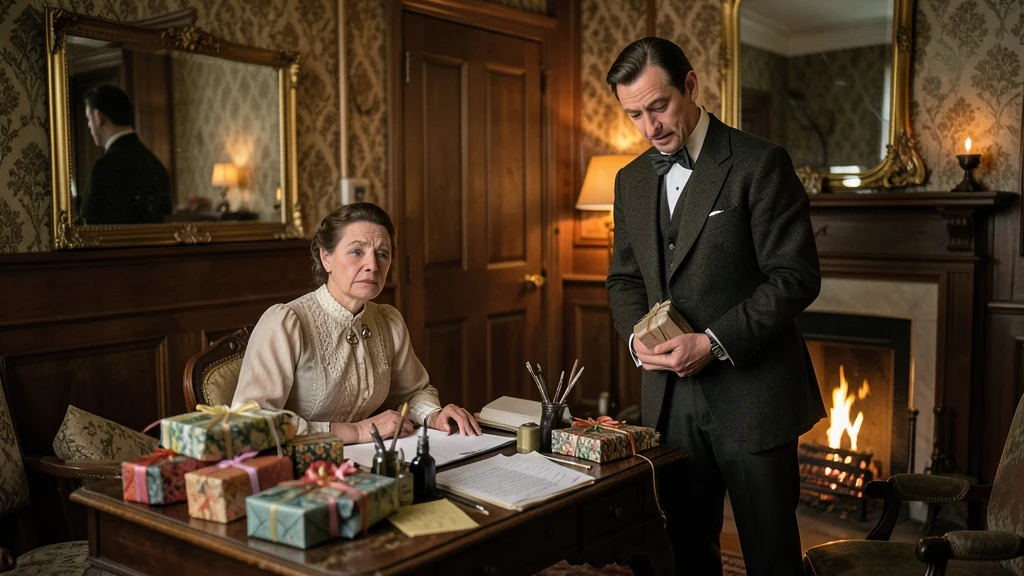
Edition and rights: Complete original English text from Project Gutenberg ebook #269. This edition is identified as public domain in the USA; the original author died in 1916, satisfying the ordinary Pakistan copyright term. This is the original work, not an AI retelling.
“DOWN PENS”


“Have you written to thank the Froplinsons for what they sent us?” asked
Egbert.

“No,” said Janetta, with a note of tired defiance in her voice; “I’ve
written eleven letters to-day expressing surprise and gratitude for
sundry unmerited gifts, but I haven’t written to the Froplinsons.”

“Some one will have to write to them,” said Egbert.

“I don’t dispute the necessity, but I don’t think the some one should be
me,” said Janetta.  “I wouldn’t mind writing a letter of angry
recrimination or heartless satire to some suitable recipient; in fact, I
should rather enjoy it, but I’ve come to the end of my capacity for
expressing servile amiability.  Eleven letters to-day and nine yesterday,
all couched in the same strain of ecstatic thankfulness: really, you
can’t expect me to sit down to another.  There is such a thing as writing
oneself out.”

“I’ve written nearly as many,” said Egbert, “and I’ve had my usual
business correspondence to get through, too.  Besides, I don’t know what
it was that the Froplinsons sent us.”

“A William the Conqueror calendar,” said Janetta, “with a quotation of
one of his great thoughts for every day in the year.”

“Impossible,” said Egbert; “he didn’t have three hundred and sixty-five
thoughts in the whole of his life, or, if he did, he kept them to
himself.  He was a man of action, not of introspection.”

“Well, it was William Wordsworth, then,” said Janetta; “I know William
came into it somewhere.”

“That sounds more probable,” said Egbert; “well, let’s collaborate on
this letter of thanks and get it done.  I’ll dictate, and you can
scribble it down.  ‘Dear Mrs. Froplinson—thank you and your husband so
much for the very pretty calendar you sent us.  It was very good of you
to think of us.’”

“You can’t possibly say that,” said Janetta, laying down her pen.

“It’s what I always do say, and what every one says to me,” protested
Egbert.

“We sent them something on the twenty-second,” said Janetta, “so they
simply _had_ to think of us.  There was no getting away from it.”

“What did we send them?” asked Egbert gloomily.

“Bridge-markers,” said Janetta, “in a cardboard case, with some inanity
about ‘digging for fortune with a royal spade’ emblazoned on the cover.
The moment I saw it in the shop I said to myself ‘Froplinsons’ and to the
attendant ‘How much?’  When he said ‘Ninepence,’ I gave him their
address, jabbed our card in, paid tenpence or elevenpence to cover the
postage, and thanked heaven.  With less sincerity and infinitely more
trouble they eventually thanked me.”

“The Froplinsons don’t play bridge,” said Egbert.

“One is not supposed to notice social deformities of that sort,” said
Janetta; “it wouldn’t be polite.  Besides, what trouble did they take to
find out whether we read Wordsworth with gladness?   For all they knew or
cared we might be frantically embedded in the belief that all poetry
begins and ends with John Masefield, and it might infuriate or depress us
to have a daily sample of Wordsworthian products flung at us.”

“Well, let’s get on with the letter of thanks,” said Egbert.

“Proceed,” said Janetta.

“‘How clever of you to guess that Wordsworth is our favourite poet,’”
dictated Egbert.

Again Janetta laid down her pen.

“Do you realise what that means?” she asked; “a Wordsworth booklet next
Christmas, and another calendar the Christmas after, with the same
problem of having to write suitable letters of thankfulness.  No, the
best thing to do is to drop all further allusion to the calendar and
switch off on to some other topic.”

“But what other topic?”

“Oh, something like this: ‘What do you think of the New Year Honours
List?  A friend of ours made such a clever remark when he read it.’  Then
you can stick in any remark that comes into your head; it needn’t be
clever.  The Froplinsons won’t know whether it is or isn’t.”

“We don’t even know on which side they are in politics,” objected Egbert;
“and anyhow you can’t suddenly dismiss the subject of the calendar.
Surely there must be some intelligent remark that can be made about it.”

“Well, we can’t think of one,” said Janetta wearily; “the fact is, we’ve
both written ourselves out.  Heavens!  I’ve just remembered Mrs. Stephen
Ludberry.  I haven’t thanked her for what she sent.”

“What did she send?”

“I forget; I think it was a calendar.”

There was a long silence, the forlorn silence of those who are bereft of
hope and have almost ceased to care.

Presently Egbert started from his seat with an air of resolution.  The
light of battle was in his eyes.

“Let me come to the writing-table,” he exclaimed.

“Gladly,” said Janetta.  “Are you going to write to Mrs. Ludberry or the
Froplinsons?”

“To neither,” said Egbert, drawing a stack of notepaper towards him; “I’m
going to write to the editor of every enlightened and influential
newspaper in the Kingdom, I’m going to suggest that there should be a
sort of epistolary Truce of God during the festivities of Christmas and
New Year.  From the twenty-fourth of December to the third or fourth of
January it shall be considered an offence against good sense and good
feeling to write or expect any letter or communication that does not deal
with the necessary events of the moment.  Answers to invitations,
arrangements about trains, renewal of club subscriptions, and, of course,
all the ordinary everyday affairs of business, sickness, engaging new
cooks, and so forth, these will be dealt with in the usual manner as
something inevitable, a legitimate part of our daily life.  But all the
devastating accretions of correspondence, incident to the festive season,
these should be swept away to give the season a chance of being really
festive, a time of untroubled, unpunctuated peace and good will.”

“But you would have to make some acknowledgment of presents received,”
objected Janetta; “otherwise people would never know whether they had
arrived safely.”

“Of course, I have thought of that,” said Egbert; “every present that was
sent off would be accompanied by a ticket bearing the date of dispatch
and the signature of the sender, and some conventional hieroglyphic to
show that it was intended to be a Christmas or New Year gift; there would
be a counterfoil with space for the recipient’s name and the date of
arrival, and all you would have to do would be to sign and date the
counterfoil, add a conventional hieroglyphic indicating heartfelt thanks
and gratified surprise, put the thing into an envelope and post it.”

“It sounds delightfully simple,” said Janetta wistfully, “but people
would consider it too cut-and-dried, too perfunctory.”

“It is not a bit more perfunctory than the present system,” said Egbert;
“I have only the same conventional language of gratitude at my disposal
with which to thank dear old Colonel Chuttle for his perfectly delicious
Stilton, which we shall devour to the last morsel, and the Froplinsons
for their calendar, which we shall never look at.  Colonel Chuttle knows
that we are grateful for the Stilton, without having to be told so, and
the Froplinsons know that we are bored with their calendar, whatever we
may say to the contrary, just as we know that they are bored with the
bridge-markers in spite of their written assurance that they thanked us
for our charming little gift.  What is more, the Colonel knows that even
if we had taken a sudden aversion to Stilton or been forbidden it by the
doctor, we should still have written a letter of hearty thanks around it.
So you see the present system of acknowledgment is just as perfunctory
and conventional as the counterfoil business would be, only ten times
more tiresome and brain-racking.”

“Your plan would certainly bring the ideal of a Happy Christmas a step
nearer realisation,” said Janetta.

“There are exceptions, of course,” said Egbert, “people who really try to
infuse a breath of reality into their letters of acknowledgment.  Aunt
Susan, for instance, who writes: ‘Thank you very much for the ham; not
such a good flavour as the one you sent last year, which itself was not a
particularly good one.  Hams are not what they used to be.’  It would be
a pity to be deprived of her Christmas comments, but that loss would be
swallowed up in the general gain.”

“Meanwhile,” said Janetta, “what am I to say to the Froplinsons?”
1 / 1


