
A Chaparral Prince
Read A Chaparral Prince, the complete 1907 story by O. Henry. Complete original English short story from Heart of the West (1907).
By O. Henry
Edition and rights: Complete original English text from Project Gutenberg ebook #1725. This edition is identified as public domain in the USA; the original author died in 1910, satisfying the ordinary Pakistan copyright term. This is the original work, not an AI retelling.
A CHAPARRAL PRINCE


Nine o’clock at last, and the drudging toil of the day was ended. Lena
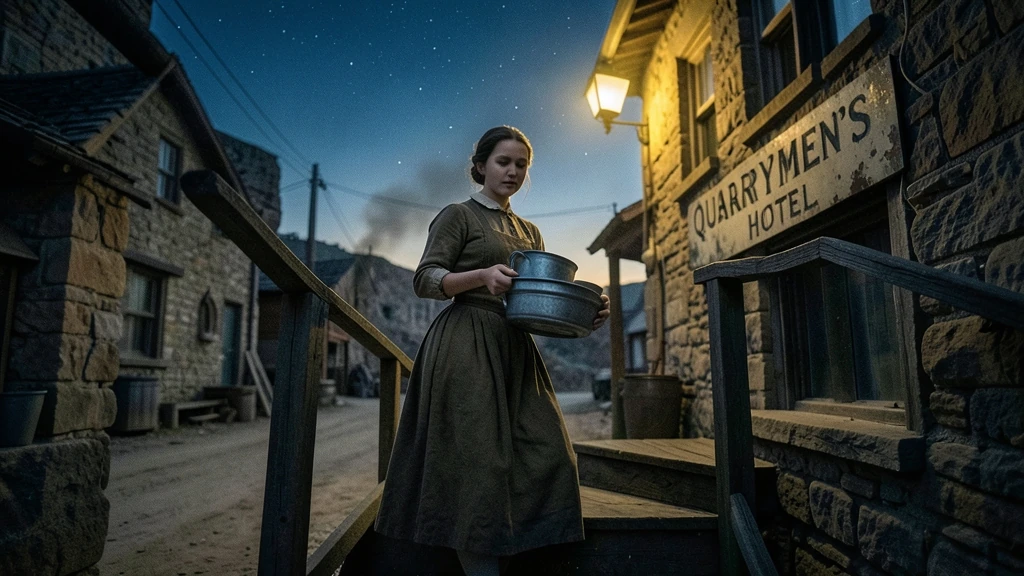
climbed to her room in the third half-story of the Quarrymen’s Hotel.
Since daylight she had slaved, doing the work of a full-grown woman,
scrubbing the floors, washing the heavy ironstone plates and cups,
making the beds, and supplying the insatiate demands for wood and water
in that turbulent and depressing hostelry.

The din of the day’s quarrying was over—the blasting and drilling, the
creaking of the great cranes, the shouts of the foremen, the backing
and shifting of the flat-cars hauling the heavy blocks of limestone.
Down in the hotel office three or four of the labourers were growling
and swearing over a belated game of checkers. Heavy odours of stewed
meat, hot grease, and cheap coffee hung like a depressing fog about the
house.

Lena lit the stump of a candle and sat limply upon her wooden chair.
She was eleven years old, thin and ill-nourished. Her back and limbs
were sore and aching. But the ache in her heart made the biggest
trouble. The last straw had been added to the burden upon her small
shoulders. They had taken away Grimm. Always at night, however tired
she might be, she had turned to Grimm for comfort and hope. Each time
had Grimm whispered to her that the prince or the fairy would come and
deliver her out of the wicked enchantment. Every night she had taken
fresh courage and strength from Grimm.

To whatever tale she read she found an analogy in her own condition.
The woodcutter’s lost child, the unhappy goose girl, the persecuted
stepdaughter, the little maiden imprisoned in the witch’s hut—all these
were but transparent disguises for Lena, the overworked kitchenmaid in
the Quarrymen’s Hotel. And always when the extremity was direst came
the good fairy or the gallant prince to the rescue.

So, here in the ogre’s castle, enslaved by a wicked spell, Lena had
leaned upon Grimm and waited, longing for the powers of goodness to
prevail. But on the day before Mrs. Maloney had found the book in her
room and had carried it away, declaring sharply that it would not do
for servants to read at night; they lost sleep and did not work briskly
the next day. Can one only eleven years old, living away from one’s
mamma, and never having any time to play, live entirely deprived of
Grimm? Just try it once and you will see what a difficult thing it is.

Lena’s home was in Texas, away up among the little mountains on the
Pedernales River, in a little town called Fredericksburg. They are all
German people who live in Fredericksburg. Of evenings they sit at
little tables along the sidewalk and drink beer and play pinochle and
scat. They are very thrifty people.

Thriftiest among them was Peter Hildesmuller, Lena’s father. And that
is why Lena was sent to work in the hotel at the quarries, thirty miles
away. She earned three dollars every week there, and Peter added her
wages to his well-guarded store. Peter had an ambition to become as
rich as his neighbour, Hugo Heffelbauer, who smoked a meerschaum pipe
three feet long and had wiener schnitzel and hassenpfeffer for dinner
every day in the week. And now Lena was quite old enough to work and
assist in the accumulation of riches. But conjecture, if you can, what
it means to be sentenced at eleven years of age from a home in the
pleasant little Rhine village to hard labour in the ogre’s castle,
where you must fly to serve the ogres, while they devour cattle and
sheep, growling fiercely as they stamp white limestone dust from their
great shoes for you to sweep and scour with your weak, aching fingers.
And then—to have Grimm taken away from you!

Lena raised the lid of an old empty case that had once contained canned
corn and got out a sheet of paper and a piece of pencil. She was going
to write a letter to her mamma. Tommy Ryan was going to post it for her
at Ballinger’s. Tommy was seventeen, worked in the quarries, went home
to Ballinger’s every night, and was now waiting in the shadows under
Lena’s window for her to throw the letter out to him. That was the only
way she could send a letter to Fredericksburg. Mrs. Maloney did not
like for her to write letters.

The stump of the candle was burning low, so Lena hastily bit the wood
from around the lead of her pencil and began. This is the letter she
wrote:

DEAREST MAMMA:—I want so much to see you. And Gretel and Claus and
Heinrich and little Adolf. I am so tired. I want to see you. To-day I
was slapped by Mrs. Maloney and had no supper. I could not bring in
enough wood, for my hand hurt. She took my book yesterday. I mean
“Grimm’s Fairy Tales,” which Uncle Leo gave me. It did not hurt any one
for me to read the book. I try to work as well as I can, but there is
so much to do. I read only a little bit every night. Dear mamma, I
shall tell you what I am going to do. Unless you send for me to-morrow
to bring me home I shall go to a deep place I know in the river and
drown. It is wicked to drown, I suppose, but I wanted to see you, and
there is no one else. I am very tired, and Tommy is waiting for the
letter. You will excuse me, mamma, if I do it.


Your respectful and loving daughter,
LENA.


Tommy was still waiting faithfully when the letter was concluded, and
when Lena dropped it out she saw him pick it up and start up the steep
hillside. Without undressing she blew out the candle and curled herself
upon the mattress on the floor.

At 10:30 o’clock old man Ballinger came out of his house in his
stocking feet and leaned over the gate, smoking his pipe. He looked
down the big road, white in the moonshine, and rubbed one ankle with
the toe of his other foot. It was time for the Fredericksburg mail to
come pattering up the road.

Old man Ballinger had waited only a few minutes when he heard the
lively hoofbeats of Fritz’s team of little black mules, and very soon
afterward his covered spring wagon stood in front of the gate. Fritz’s
big spectacles flashed in the moonlight and his tremendous voice
shouted a greeting to the postmaster of Ballinger’s. The mail-carrier
jumped out and took the bridles from the mules, for he always fed them
oats at Ballinger’s.

While the mules were eating from their feed bags old man Ballinger
brought out the mail sack and threw it into the wagon.

Fritz Bergmann was a man of three sentiments—or to be more accurate—
four, the pair of mules deserving to be reckoned individually. Those
mules were the chief interest and joy of his existence. Next came the
Emperor of Germany and Lena Hildesmuller.

“Tell me,” said Fritz, when he was ready to start, “contains the sack a
letter to Frau Hildesmuller from the little Lena at the quarries? One
came in the last mail to say that she is a little sick, already. Her
mamma is very anxious to hear again.”

“Yes,” said old man Ballinger, “thar’s a letter for Mrs. Helterskelter,
or some sich name. Tommy Ryan brung it over when he come. Her little
gal workin’ over thar, you say?”

“In the hotel,” shouted Fritz, as he gathered up the lines; “eleven
years old and not bigger as a frankfurter. The close-fist of a Peter
Hildesmuller!—some day I shall with a big club pound that man’s
dummkopf—all in and out the town. Perhaps in this letter Lena will say
that she is yet feeling better. So, her mamma will be glad. _Auf
wiedersehen_, Herr Ballinger—your feets will take cold out in the night
air.”

“So long, Fritzy,” said old man Ballinger. “You got a nice cool night
for your drive.”

Up the road went the little black mules at their steady trot, while
Fritz thundered at them occasional words of endearment and cheer.

These fancies occupied the mind of the mail-carrier until he reached
the big post oak forest, eight miles from Ballinger’s. Here his
ruminations were scattered by the sudden flash and report of pistols
and a whooping as if from a whole tribe of Indians. A band of galloping
centaurs closed in around the mail wagon. One of them leaned over the
front wheel, covered the driver with his revolver, and ordered him to
stop. Others caught at the bridles of Donder and Blitzen.

“Donnerwetter!” shouted Fritz, with all his tremendous voice—“wass ist?
Release your hands from dose mules. Ve vas der United States mail!”

“Hurry up, Dutch!” drawled a melancholy voice. “Don’t you know when
you’re in a stick-up? Reverse your mules and climb out of the cart.”

It is due to the breadth of Hondo Bill’s demerit and the largeness of
his achievements to state that the holding up of the Fredericksburg
mail was not perpetrated by way of an exploit. As the lion while in the
pursuit of prey commensurate to his prowess might set a frivolous foot
upon a casual rabbit in his path, so Hondo Bill and his gang had
swooped sportively upon the pacific transport of Meinherr Fritz.

The real work of their sinister night ride was over. Fritz and his mail
bag and his mules came as gentle relaxation, grateful after the arduous
duties of their profession. Twenty miles to the southeast stood a train
with a killed engine, hysterical passengers and a looted express and
mail car. That represented the serious occupation of Hondo Bill and his
gang. With a fairly rich prize of currency and silver the robbers were
making a wide detour to the west through the less populous country,
intending to seek safety in Mexico by means of some fordable spot on
the Rio Grande. The booty from the train had melted the desperate
bushrangers to jovial and happy skylarkers.

Trembling with outraged dignity and no little personal apprehension,
Fritz climbed out to the road after replacing his suddenly removed
spectacles. The band had dismounted and were singing, capering, and
whooping, thus expressing their satisfied delight in the life of a
jolly outlaw. Rattlesnake Rogers, who stood at the heads of the mules,
jerked a little too vigorously at the rein of the tender-mouthed
Donder, who reared and emitted a loud, protesting snort of pain.
Instantly Fritz, with a scream of anger, flew at the bulky Rogers and
began to assiduously pummel that surprised freebooter with his fists.

“Villain!” shouted Fritz, “dog, bigstiff! Dot mule he has a soreness by
his mouth. I vill knock off your shoulders mit your head— robbermans!”

“Yi-yi!” howled Rattlesnake, roaring with laughter and ducking his
head, “somebody git this here sour-krout off’n me!”

One of the band yanked Fritz back by the coat-tail, and the woods rang
with Rattlesnake’s vociferous comments.

“The dog-goned little wienerwurst,” he yelled, amiably. “He’s not so
much of a skunk, for a Dutchman. Took up for his animile plum quick,
didn’t he? I like to see a man like his hoss, even if it is a mule. The
dad-blamed little Limburger he went for me, didn’t he! Whoa, now,
muley—I ain’t a-goin’ to hurt your mouth agin any more.”

Perhaps the mail would not have been tampered with had not Ben Moody,
the lieutenant, possessed certain wisdom that seemed to promise more
spoils.

“Say, Cap,” he said, addressing Hondo Bill, “there’s likely to be good
pickings in these mail sacks. I’ve done some hoss tradin’ with these
Dutchmen around Fredericksburg, and I know the style of the varmints.
There’s big money goes through the mails to that town. Them Dutch risk
a thousand dollars sent wrapped in a piece of paper before they’d pay
the banks to handle the money.”

Hondo Bill, six feet two, gentle of voice and impulsive in action, was
dragging the sacks from the rear of the wagon before Moody had finished
his speech. A knife shone in his hand, and they heard the ripping sound
as it bit through the tough canvas. The outlaws crowded around and
began tearing open letters and packages, enlivening their labours by
swearing affably at the writers, who seemed to have conspired to
confute the prediction of Ben Moody. Not a dollar was found in the
Fredericksburg mail.

“You ought to be ashamed of yourself,” said Hondo Bill to the
mail-carrier in solemn tones, “to be packing around such a lot of old,
trashy paper as this. What d’you mean by it, anyhow? Where do you
Dutchers keep your money at?”

The Ballinger mail sack opened like a cocoon under Hondo’s knife. It
contained but a handful of mail. Fritz had been fuming with terror and
excitement until this sack was reached. He now remembered Lena’s
letter. He addressed the leader of the band, asking that that
particular missive be spared.

“Much obliged, Dutch,” he said to the disturbed carrier. “I guess
that’s the letter we want. Got spondulicks in it, ain’t it? Here she
is. Make a light, boys.”

Hondo found and tore open the letter to Mrs. Hildesmuller. The others
stood about, lighting twisted up letters one from another. Hondo gazed
with mute disapproval at the single sheet of paper covered with the
angular German script.

“Whatever is this you’ve humbugged us with, Dutchy? You call this here
a valuable letter? That’s a mighty low-down trick to play on your
friends what come along to help you distribute your mail.”

“That’s Chiny writin’,” said Sandy Grundy, peering over Hondo’s
shoulder.

“You’re off your kazip,” declared another of the gang, an effective
youth, covered with silk handkerchiefs and nickel plating. “That’s
shorthand. I see ’em do it once in court.”

“Ach, no, no, no—dot is German,” said Fritz. “It is no more as a little
girl writing a letter to her mamma. One poor little girl, sick and
vorking hard avay from home. Ach! it is a shame. Good Mr. Robberman,
you vill please let me have dot letter?”

“What the devil do you take us for, old Pretzels?” said Hondo with
sudden and surprising severity. “You ain’t presumin’ to insinuate that
we gents ain’t possessed of sufficient politeness for to take an
interest in the miss’s health, are you? Now, you go on, and you read
that scratchin’ out loud and in plain United States language to this
here company of educated society.”

Hondo twirled his six-shooter by its trigger guard and stood towering
above the little German, who at once began to read the letter,
translating the simple words into English. The gang of rovers stood in
absolute silence, listening intently.

“How old is that kid?” asked Hondo when the letter was done.

“Eleven,” said Fritz.

“And where is she at?”

“At dose rock quarries—working. Ach, mein Gott—little Lena, she speak
of drowning. I do not know if she vill do it, but if she shall I
schwear I vill dot Peter Hildesmuller shoot mit a gun.”

“You Dutchers,” said Hondo Bill, his voice swelling with fine contempt,
“make me plenty tired. Hirin’ out your kids to work when they ought to
be playin’ dolls in the sand. You’re a hell of a sect of people. I
reckon we’ll fix your clock for a while just to show what we think of
your old cheesy nation. Here, boys!”

Hondo Bill parleyed aside briefly with his band, and then they seized
Fritz and conveyed him off the road to one side. Here they bound him
fast to a tree with a couple of lariats. His team they tied to another
tree near by.

“We ain’t going to hurt you bad,” said Hondo reassuringly. “’Twon’t
hurt you to be tied up for a while. We will now pass you the time of
day, as it is up to us to depart. Ausgespielt—nixcumrous, Dutchy. Don’t
get any more impatience.”

Fritz heard a great squeaking of saddles as the men mounted their
horses. Then a loud yell and a great clatter of hoofs as they galloped
pell-mell back along the Fredericksburg road.

For more than two hours Fritz sat against his tree, tightly but not
painfully bound. Then from the reaction after his exciting adventure he
sank into slumber. How long he slept he knew not, but he was at last
awakened by a rough shake. Hands were untying his ropes. He was lifted
to his feet, dazed, confused in mind, and weary of body. Rubbing his
eyes, he looked and saw that he was again in the midst of the same band
of terrible bandits. They shoved him up to the seat of his wagon and
placed the lines in his hands.

“Hit it out for home, Dutch,” said Hondo Bill’s voice commandingly.
“You’ve given us lots of trouble and we’re pleased to see the back of
your neck. Spiel! Zwei bier! Vamoose!”

Hondo reached out and gave Blitzen a smart cut with his quirt.

The little mules sprang ahead, glad to be moving again. Fritz urged
them along, himself dizzy and muddled over his fearful adventure.

According to schedule time, he should have reached Fredericksburg at
daylight. As it was, he drove down the long street of the town at
eleven o’clock A.M. He had to pass Peter Hildesmuller’s house on his
way to the post-office. He stopped his team at the gate and called. But
Frau Hildesmuller was watching for him. Out rushed the whole family of
Hildesmullers.

Frau Hildesmuller, fat and flushed, inquired if he had a letter from
Lena, and then Fritz raised his voice and told the tale of his
adventure. He told the contents of that letter that the robber had made
him read, and then Frau Hildesmuller broke into wild weeping. Her
little Lena drown herself! Why had they sent her from home? What could
be done? Perhaps it would be too late by the time they could send for
her now. Peter Hildesmuller dropped his meerschaum on the walk and it
shivered into pieces.

“Woman!” he roared at his wife, “why did you let that child go away? It
is your fault if she comes home to us no more.”

Every one knew that it was Peter Hildesmuller’s fault, so they paid no
attention to his words.

A moment afterward a strange, faint voice was heard to call: “Mamma!”
Frau Hildesmuller at first thought it was Lena’s spirit calling, and
then she rushed to the rear of Fritz’s covered wagon, and, with a loud
shriek of joy, caught up Lena herself, covering her pale little face
with kisses and smothering her with hugs. Lena’s eyes were heavy with
the deep slumber of exhaustion, but she smiled and lay close to the one
she had longed to see. There among the mail sacks, covered in a nest of
strange blankets and comforters, she had lain asleep until wakened by
the voices around her.

Fritz stared at her with eyes that bulged behind his spectacles.

“Gott in Himmel!” he shouted. “How did you get in that wagon? Am I
going crazy as well as to be murdered and hanged by robbers this day?”

“You brought her to us, Fritz,” cried Frau Hildesmuller. “How can we
ever thank you enough?”

“Tell mamma how you came in Fritz’s wagon,” said Frau Hildesmuller.

“I don’t know,” said Lena. “But I know how I got away from the hotel.
The Prince brought me.”

“By the Emperor’s crown!” shouted Fritz, “we are all going crazy.”

“I always knew he would come,” said Lena, sitting down on her bundle of
bedclothes on the sidewalk. “Last night he came with his armed knights
and captured the ogre’s castle. They broke the dishes and kicked down
the doors. They pitched Mr. Maloney into a barrel of rain water and
threw flour all over Mrs. Maloney. The workmen in the hotel jumped out
of the windows and ran into the woods when the knights began firing
their guns. They wakened me up and I peeped down the stair. And then
the Prince came up and wrapped me in the bedclothes and carried me out.
He was so tall and strong and fine. His face was as rough as a
scrubbing brush, and he talked soft and kind and smelled of schnapps.
He took me on his horse before him and we rode away among the knights.
He held me close and I went to sleep that way, and didn’t wake up till
I got home.”

“Rubbish!” cried Fritz Bergmann. “Fairy tales! How did you come from
the quarries to my wagon?”

“The Prince brought me,” said Lena, confidently.

And to this day the good people of Fredericksburg haven’t been able to
make her give any other explanation.


XIX
1 / 1


