
The Other Bed
Read The Other Bed, the complete 1912 story by E. F. Benson. A complete original English tale of the uncanny from a 1912 collection of Edwardian supernatural stories.
By E. F. Benson
Edition and rights: Complete original English text from Project Gutenberg ebook #72421. This edition is identified as public domain in the USA; the original author died in 1940, satisfying the ordinary Pakistan copyright term. This is the original work, not an AI retelling.
THE OTHER BED


I had gone out to Switzerland just before Christmas, expecting, from
experience, a month of divinely renovating weather, of skating all day
in brilliant sun, and basking in the hot frost of that windless
atmosphere. Occasionally, as I knew, there might be a snowfall, which
would last perhaps for forty-eight hours at the outside, and would be
succeeded by another ten days of cloudless perfection, cold even to zero
at night, but irradiated all day long by the unflecked splendour of the
sun.

Instead the climatic conditions were horrible. Day after day a gale
screamed through this upland valley that should have been so windless
and serene, bringing with it a tornado of sleet that changed to snow by
night. For ten days there was no abatement of it, and evening after
evening, as I consulted my barometer, feeling sure that the black finger
would show that we were coming to the end of these abominations, I found
that it had sunk a little lower yet, till it stayed, like a homing
pigeon, on the S of storm. I mention these things in depreciation of the
story that follows, in order that the intelligent reader may say at
once, if he wishes, that all that occurred was merely a result of the
malaise of nerves and digestion that perhaps arose from those
storm-bound and disturbing conditions. And now to go back to the
beginning again.

I had written to engage a room at the Hôtel Beau Site, and had been
agreeably surprised on arrival to find that for the modest sum of twelve
francs a day I was allotted a room on the first floor with two beds in
it. Otherwise the hotel was quite full. Fearing to be billeted in a
twenty-two-franc room, by mistake, I instantly confirmed my arrangements
at the bureau. There was no mistake: I had ordered a twelve-franc room
and had been given one. The very civil clerk hoped that I was satisfied
with it, for otherwise there was nothing vacant. I hastened to say that
I was more than satisfied, fearing the fate of Esau.

I arrived about three in the afternoon of a cloudless and glorious day,
the last of the series. I hurried down to the rink, having had the
prudence to put skates in the forefront of my luggage, and spent a
divine but struggling hour or two, coming up to the hotel about sunset.
I had letters to write, and after ordering tea to be sent up to my
gorgeous apartment, No. 23, on the first floor, I went straight up
there.

The door was ajar and--I feel certain I should not even remember this
now except in the light of what followed--just as I got close to it, I
heard some faint movement inside the room and instinctively knew that
my servant was there unpacking. Next moment I was in the room myself,
and it was empty. The unpacking had been finished, and everything was
neat, orderly, and comfortable. My barometer was on the table, and I
observed with dismay that it had gone down nearly half an inch. I did
not give another thought to the movement I thought I had heard from
outside.

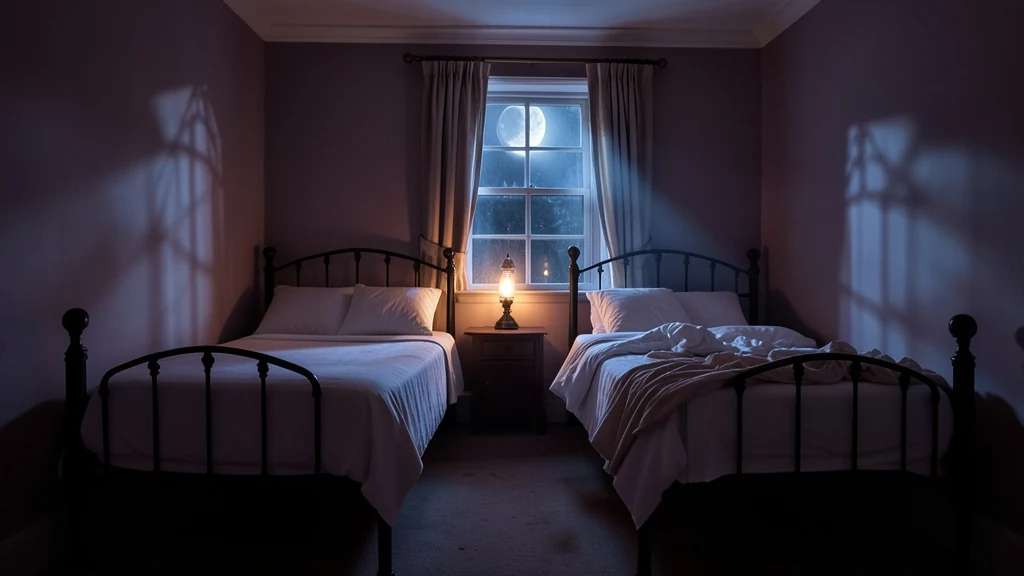
Certainly I had a delightful room for my twelve francs a day. There
were, as I have said, two beds in it, on one of which were already laid
out my dress-clothes, while night-things were disposed on the other.
There were two windows, between which stood a large washing-stand, with
plenty of room on it; a sofa with its back to the light stood
conveniently near the pipes of central heating, there were a couple of
good arm-chairs, a writing table, and, rarest of luxuries, another
table, so that every time one had breakfast it was not necessary to pile
up a drift of books and papers to make room for the tray. My window
looked east, and sunset still flamed on the western faces of the virgin
snows, while above, in spite of the dejected barometer, the sky was bare
of clouds, and a thin slip of pale crescent moon was swung high among
the stars that still burned dimly in these first moments of their
kindling. Tea came up for me without delay, and, as I ate, I regarded my
surroundings with extreme complacency.

Then, quite suddenly and without cause, I saw that the disposition of
the beds would never do; I could not possibly sleep in the bed that my
servant had chosen for me, and without pause I jumped up, transferred my
dress clothes to the other bed, and put my night things where they had
been. It was done breathlessly almost, and not till then did I ask
myself why I had done it. I found I had not the slightest idea. I had
merely felt that I could not sleep in the other bed. But having made the
change I felt perfectly content.

My letters took me an hour or so to finish, and I had yawned and blinked
considerably over the last one or two, in part from their inherent
dullness, in part from quite natural sleepiness. For I had been in the
train for twenty-four hours, and was fresh to these bracing airs which
so conduce to appetite, activity, and sleep, and as there was still an
hour before I need dress, I lay down on my sofa with a book for excuse,
but the intention to slumber as reason. And consciousness ceased as if a
tap had been turned off.

Then--I dreamed. I dreamed that my servant came very quietly into the
room, to tell me no doubt that it was time to dress. I supposed there
were a few minutes to spare yet, and that he saw I was dozing, for,
instead of rousing me, he moved quietly about the room, setting things
in order. The light appeared to me to be very dim, for I could not see
him with any distinctness, indeed, I only knew it was he because it
could not be anybody else. Then he paused by my washing-stand, which had
a shelf for brushes and razors above it, and I saw him take a razor from
its case and begin stropping it; the light was strongly reflected on the
blade of the razor. He tried the edge once or twice on his thumbnail,
and then to my horror I saw him trying it on his throat. Instantaneously
one of those deafening dream-crashes awoke me, and I saw the door half
open, and my servant in the very act of coming in. No doubt the opening
of the door had constituted the crash.

I had joined a previously-arrived party of five, all of us old friends,
and accustomed to see each other often, and at dinner, and afterwards in
intervals of bridge, the conversation roamed agreeably over a variety of
topics, rocking-turns and the prospects of weather (a thing of vast
importance in Switzerland, and not a commonplace subject) and the
performances at the opera, and under what circumstances as revealed in
dummy’s hand, is it justifiable for a player to refuse to return his
partner’s original lead in no trumps. Then over whisky and soda and the
repeated “last cigarette,” it veered back via the Zantzigs to thought
transference and the transference of emotion. Here one of the party,
Harry Lambert, put forward the much discussed explanation of haunted
houses based on this principle. He put it very concisely.

“Everything that happens,” he said, “whether it is a step we take, or a
thought that crosses our mind, makes some change in its immediate
material world. Now the most violent and concentrated emotion we can
imagine is the emotion that leads a man to take so extreme a step as
killing himself or somebody else. I can easily imagine such a deed so
eating into the material scene, the room or the haunted heath, where it
happens, that its mark lasts an enormous time. The air rings with the
cry of the slain and still drips with his blood. It is not everybody who
will perceive it, but sensitives will. By the way, I am sure that man
who waits on us at dinner is a sensitive.”

It was already late, and I rose.

“Let us hurry him to the scene of a crime,” I said. “For myself I shall
hurry to the scene of sleep.”

       *       *       *       *       *

Outside the threatening promise of the barometer was already finding
fulfilment, and a cold ugly wind was complaining among the pines, and
hooting round the peaks, and snow had begun to fall. The night was
thickly overcast, and it seemed as if uneasy presences were going to and
fro in the darkness. But there was no use in ill augury, and certainly
if we were to be house-bound for a few days I was lucky in having so
commodious a lodging. I had plenty to occupy myself with indoors, though
I should vastly have preferred to be engaged outside, and in the
immediate present how good it was to lie free in a proper bed after a
cramped night in the train.

       *       *       *       *       *

I was half-undressed when there came a tap at my door, and the waiter
who had served us at dinner came in carrying a bottle of whisky. He was
a tall young fellow, and though I had not noticed him at dinner, I saw
at once now, as he stood in the glare of the electric light, what Harry
had meant when he said he was sure he was a sensitive. There is no
mistaking that look: it is exhibited in a peculiar “inlooking” of the
eye. Those eyes, one knows, see further than the surface....

“The bottle of whisky for monsieur,” he said, putting it down on the
table.

“But I ordered no whisky,” said I.

He looked puzzled.

“Number twenty-three?” he said.

Then he glanced at the other bed.

“Ah, for the other gentleman, without doubt,” he said.

“But there is no other gentleman,” said I. “I am alone here.”

He took up the bottle again.

“Pardon, monsieur,” he said. “There must be a mistake. I am new here; I
only came to-day. But I thought----”

“Yes?” said I.

“I thought that number twenty-three had ordered a bottle of whisky,” he
repeated. “Good-night, monsieur, and pardon.”

       *       *       *       *       *

I got into bed, extinguished the light, and feeling very sleepy and
heavy with the oppression, no doubt, of the snow that was coming,
expected to fall asleep at once. Instead my mind would not quite go to
roost, but kept sleepily stumbling about among the little events of the
day, as some tired pedestrian in the dark stumbles over stones instead
of lifting his feet. And as I got sleepier it seemed to me that my mind
kept moving in a tiny little circle. At one moment it drowsily
recollected how I had thought I had heard movement inside my room, at
the next it remembered my dream of some figure going stealthily about
and stropping a razor, at a third it wondered why this Swiss waiter with
the eyes of a “sensitive” thought that number twenty-three had ordered a
bottle of whisky. But at the time I made no guess as to any coherence
between these little isolated facts; I only dwelt on them with drowsy
persistence. Then a fourth fact came to join the sleepy circle, and I
wondered why I had felt a repugnance against using the other bed. But
there was no explanation of this forthcoming, either, and the outlines
of thought grew more blurred and hazy, until I lost consciousness
altogether.

       *       *       *       *       *

Next morning began the series of awful days, sleet and snow falling
relentlessly with gusts of chilly wind, making any out-of-door
amusement next to impossible. The snow was too soft for toboganning, it
balled on the skies, and as for the rink it was but a series of pools of
slushy snow. This in itself, of course, was quite enough to account for
any ordinary depression and heaviness of spirit, but all the time I felt
there was something more than that to which I owed the utter blackness
that hung over those days. I was beset too by fear that at first was
only vague, but which gradually became more definite, until it resolved
itself into a fear of number twenty-three and in particular a terror of
the other bed. I had no notion why or how I was afraid of it, the thing
was perfectly causeless, but the shape and the outline of it grew slowly
clearer, as detail after detail of ordinary life, each minute and
trivial in itself, carved and moulded this fear, till it became
definite. Yet the whole thing was so causeless and childish that I could
speak to no one of it; I could but assure myself that it was all a
figment of nerves disordered by this unseemly weather.

However, as to the details, there were plenty of them. Once I woke up
from strangling nightmare, unable at first to move, but in a panic of
terror, believing that I was sleeping in the other bed. More than once,
too, awaking before I was called, and getting out of bed to look at the
aspect of the morning, I saw with a sense of dreadful misgiving that the
bed-clothes on the other bed were strangely disarranged, as if some one
had slept there, and smoothed them down afterwards, but not so well as
not to give notice of the occupation. So one night I laid a trap, so to
speak, for the intruder, of which the real object was to calm my own
nervousness (for I still told myself that I was frightened of nothing),
and tucked in the sheet very carefully, laying the pillow on the top of
it. But in the morning it seemed as if my interference had not been to
the taste of the occupant, for there was more impatient disorder than
usual in the bed-clothes, and on the pillow was an indentation, round
and rather deep, such as we may see any morning in our own beds. Yet by
day these things did not frighten me, but it was when I went to bed at
night that I quaked at the thought of further developments.

It happened also from time to time that I wanted something brought me,
or wanted my servant. On three or four of these occasions my bell was
answered by the “Sensitive,” as we called him, but the Sensitive, I
noticed, never came into the room. He would open the door a chink to
receive my order, and on returning would again open it a chink to say
that my boots, or whatever it was, were at the door. Once I made him
come in, but I saw him cross himself as, with a face of icy terror, he
stepped into the room, and the sight somehow did not reassure me. Twice
also he came up in the evening, when I had not rung at all, even as he
came up the first night, and opened the door a chink to say that my
bottle of whisky was outside. But the poor fellow was in a state of such
bewilderment when I went out and told him that I had not ordered whisky,
that I did not press for an explanation. He begged my pardon profusely;
he thought a bottle of whisky had been ordered for number twenty-three.
It was his mistake, entirely--I should not be charged for it; it must
have been the other gentleman. Pardon again; he remembered there was no
other gentleman, the other bed was unoccupied.

It was on the night when this happened for the second time that I
definitely began to wish that I too was quite certain that the other bed
was unoccupied. The ten days of snow and sleet were at an end, and
to-night the moon once more, grown from a mere slip to a shining shield,
swung serenely among the stars. But though at dinner everyone exhibited
an extraordinary change of spirit, with the rising of the barometer and
the discharge of this huge snow-fall, the intolerable gloom which had
been mine so long but deepened and blackened. The fear was to me now
like some statue, nearly finished, modelled by the carving hands of
these details, and though it still stood below its moistened sheet, any
moment, I felt, the sheet might be twitched away, and I be confronted
with it. Twice that evening I had started to go to the bureau, to ask to
have a bed made up for me, anywhere, in the billiard-room or the
smoking-room, since the hotel was full, but the intolerable childishness
of the proceeding revolted me. What was I afraid of? A dream of my own,
a mere nightmare? Some fortuitous disarrangement of bed-linen? The fact
that a Swiss waiter made mistakes about bottles of whisky? It was an
impossible cowardice.

But equally impossible that night were billiards or bridge, or any form
of diversion. My only salvation seemed to lie in downright hard work,
and soon after dinner I went to my room (in order to make my first real
counter-move against fear) and sat down solidly to several hours of
proof-correcting, a menial and monotonous employment, but one which is
necessary, and engages the entire attention. But first I looked
thoroughly round the room, to reassure myself, and found all modern and
solid; a bright paper of daisies on the wall, a floor parquetted, the
hot-water pipes chuckling to themselves in the corner, my bed-clothes
turned down for the night, the other bed----

The electric light was burning brightly, and there seemed to me to be a
curious stain, as of a shadow, on the lower part of the pillow and the
top of the sheet, definite and suggestive, and for a moment I stood
there again throttled by a nameless terror. Then taking my courage in my
hands I went closer and looked at it. Then I touched it; the sheet,
where the stain or shadow was, seemed damp to the hand, so also was the
pillow. And then I remembered; I had thrown some wet clothes on the bed
before dinner. No doubt that was the reason. And fortified by this
extremely simple dissipation of my fear, I sat down and began on my
proofs. But my fear had been this, that the stain had not in that first
moment looked like the mere greyness of water-moistened linen.

From below, at first, came the sound of music, for they were dancing
to-night, but I grew absorbed in my work, and only recorded the fact
that after a time there was no more music. Steps went along the
passages, and I heard the buzz of conversation on landings, and the
closing of doors till by degrees the silence became noticeable. The
loneliness of night had come.

It was after the silence had become lonely that I made the first pause
in my work, and by the watch on my table saw that it was already past
midnight. But I had little more to do; another half-hour would see the
end of the business, but there were certain notes I had to make for
future reference, and my stock of paper was already exhausted. However,
I had bought some in the village that afternoon, and it was in the
bureau downstairs, where I had left it, when I came in and had
subsequently forgotten to bring it upstairs. It would be the work of a
minute only to get it.

The electric light had brightened considerably during the last hour,
owing no doubt to many burners being put out in the hotel, and as I left
the room I saw again the stain on the pillow and sheet of the other bed.
I had really forgotten all about it for the last hour, and its presence
there came as an unwelcome surprise. Then I remembered the explanation
of it, which had struck me before, and for purposes of self-reassurement
I again touched it. It was still damp, but--Had I got chilly with my
work? For it was warm to the hand. Warm, and surely rather sticky. It
did not seem like the touch of the water-damp. And at the same moment I
knew I was not alone in the room. There was something there, something
silent as yet, and as yet invisible. But it was there.

Now for the consolation of persons who are inclined to be fearful, I may
say at once that I am in no way brave, but that terror which, God knows,
was real enough, was yet so interesting, that interest overruled it. I
stood for a moment by the other bed, and, half-consciously only, wiped
the hand that had felt the stain, for the touch of it, though all the
time I told myself that it was but the touch of the melted snow on the
coat I had put there, was unpleasant and unclean. More than that I did
not feel, because in the presence of the unknown and the perhaps awful,
the sense of curiosity, one of the strongest instincts we have, came to
the fore. So, rather eager to get back to my room again, I ran
downstairs to get the packet of paper. There was still a light in the
bureau, and the Sensitive, on night-duty, I suppose, was sitting there
dozing. My entrance did not disturb him, for I had on noiseless felt
slippers, and seeing at once the package I was in search of, I took it,
and left him still unawakened. That was somehow of a fortifying nature.
The Sensitive anyhow could sleep in his hard chair; the occupant of the
unoccupied bed was not calling to him to-night.

I closed my door quietly, as one does at night when the house is silent,
and sat down at once to open my packet of paper and finish my work. It
was wrapped up in an old news-sheet, and struggling with the last of the
string that bound it, certain words caught my eye. Also the date at the
top of the paper caught my eye, a date nearly a year old, or, to be
quite accurate, a date fifty-one weeks old. It was an American paper and
what it recorded was this:

“The body of Mr Silas R. Hume, who committed suicide last week at the
Hôtel Beau Site, Moulin sur Chalons, is to be buried at his house in
Boston, Mass. The inquest held in Switzerland showed that he cut his
throat with a razor, in an attack of delirium tremens induced by drink.
In the cupboard of his room were found three dozen empty bottles of
Scotch whisky....”

So far I had read when without warning the electric light went out, and
I was left in, what seemed for the moment, absolute darkness. And again
I knew I was not alone, and I knew now who it was who was with me in the
room.

Then the absolute paralysis of fear seized me. As if a wind had blown
over my head, I felt the hair of it stir and rise a little. My eyes
also, I suppose, became accustomed to the sudden darkness, for they
could now perceive the shape of the furniture in the room from the light
of the starlit sky outside. They saw more too than the mere furniture.
There was standing by the wash-stand between the two windows a figure,
clothed only in night-garments, and its hands moved among the objects on
the shelf above the basin. Then with two steps it made a sort of dive
for the other bed, which was in shadow. And then the sweat poured on to
my forehead.

Though the other bed stood in shadow I could still see dimly, but
sufficiently, what was there. The shape of a head lay on the pillow, the
shape of an arm lifted its hand to the electric bell that was close by
on the wall, and I fancied I could hear it distantly ringing. Then a
moment later came hurrying feet up the stairs and along the passage
outside, and a quick rapping at my door.

“Monsieur’s whisky, monsieur’s whisky,” said a voice just outside.
“Pardon, monsieur, I brought it as quickly as I could.”

The impotent paralysis of cold terror was still on me. Once I tried to
speak and failed, and still the gentle tapping went on at the door, and
the voice telling some one that his whisky was there. Then at a second
attempt, I heard a voice which was mine saying hoarsely:

“For God’s sake come in; I am alone with it.”

       *       *       *       *       *

There was the click of a turned door-handle, and as suddenly as it had
gone out a few seconds before, the electric light came back again, and
the room was in full illumination. I saw a face peer round the corner of
the door, but it was at another face I looked, the face of a man sallow
and shrunken, who lay in the other bed, staring at me with glazed eyes.
He lay high in bed, and his throat was cut from ear to ear; and the
lower part of the pillow was soaked in blood, and the sheet streamed
with it.

       *       *       *       *       *

Then suddenly that hideous vision vanished, and there was only a
sleepy-eyed waiter looking into the room. But below the sleepiness
terror was awake, and his voice shook when he spoke.

“Monsieur rang?” he asked.

No, monsieur had not rung. But monsieur made himself a couch in the
billiard-room.
1 / 1


