
Extreme Weather Is Changing Forests, Wildlife and Human Life
Extreme weather is changing forests, wildlife and human life through heat, drought, flood and fire—but effects vary across connected ecosystems.
By Wajeeha Iqbal
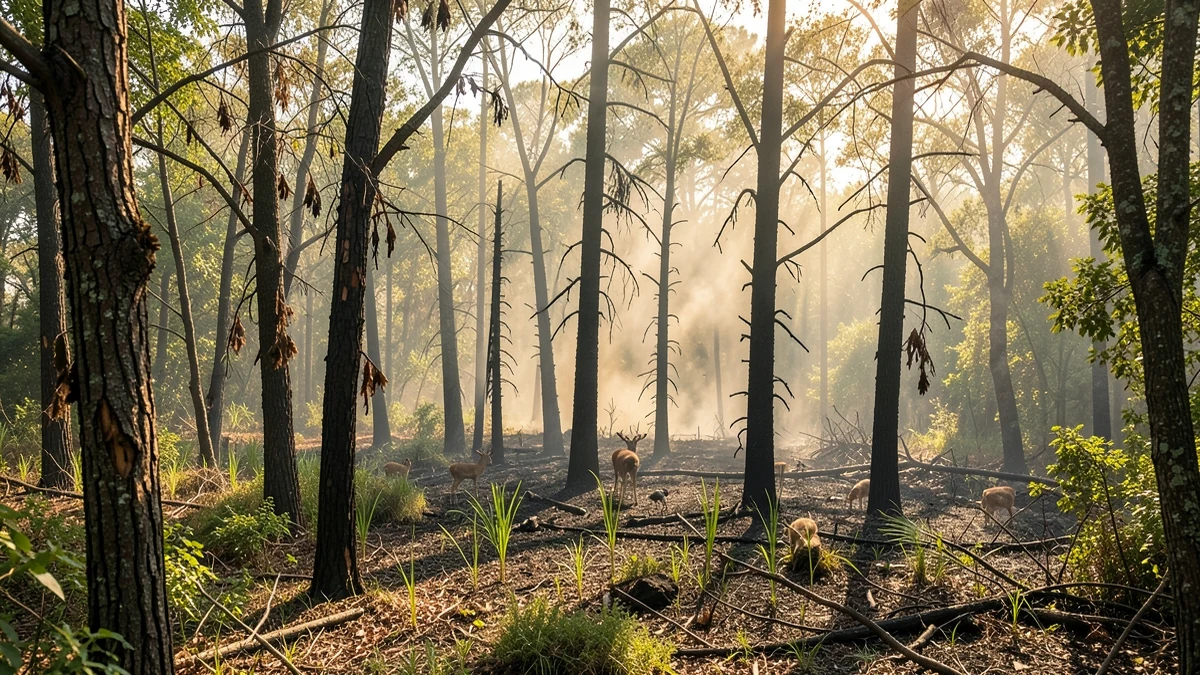
Climate change, forests and wildlife are often discussed as separate subjects: a temperature graph, a burning woodland, an animal moving beyond its familiar range. In reality, they belong to one connected system. Extreme weather changes soil moisture, tree growth, streams, insects, food and shelter. Those ecological changes then reach farms, towns, public health and livelihoods.
Not every flood, drought or fire is caused solely by climate change. Weather has always varied, and landscapes have always faced disturbance. The stronger scientific claim is that human-caused warming is changing the background conditions: making some heat extremes more frequent or intense, altering rainfall patterns, drying fuels in many regions and raising the likelihood of compound events. Effects differ by ecosystem, but the connections are increasingly difficult to ignore.
Heatwaves push living systems toward thresholds
A heatwave is not simply an uncomfortable run of hot afternoons. Plants and animals operate within physiological limits. Trees cool themselves by releasing water through leaves, but during extreme heat and drought they may close their stomata to conserve moisture. That response reduces photosynthesis and growth. If heat and water stress continue, tissues can be damaged and a tree’s ability to resist insects or disease may weaken.
Animals respond through shade-seeking, panting, reduced movement, burrowing or moving to cooler elevations and latitudes. These strategies cost time and energy. An animal that forages only at night may find less food; a bird guarding a nest may have to choose between cooling itself and protecting young. Aquatic organisms face a different trap: warm water holds less oxygen, and a hot, shallow stream can become unsuitable even when the surrounding forest appears green.
Thresholds matter because average temperature alone can conceal brief lethal periods. A population may tolerate a warmer season but collapse when heat coincides with breeding, migration or low water. Urban wildlife and people encounter the heat-island effect, while fragmented habitat makes escape harder.
Drought changes forests from the roots upward
Drought begins as a shortage of precipitation but becomes ecological through duration, timing and heat. High temperatures increase evaporation and atmospheric demand for moisture. Soil dries; shallow-rooted plants suffer first; deeper-rooted trees draw on reserves that may take years to replenish.
Trees do not all respond alike. Species adapted to seasonal dryness may survive conditions that damage trees from wetter climates. Age, soil depth, slope and competition affect access to water. A mixed forest can therefore develop patches of mortality rather than dying uniformly. That patchiness changes light, wind and fuel, influencing what grows next.
Drought also reorganizes food. Fewer flowers affect pollinators. Poor seed and fruit production reaches birds and mammals. Reduced vegetation pushes grazing animals toward farms or remaining water, increasing conflict with people. Predators may follow prey into new areas. An ecological effect that begins as low soil moisture can end as a damaged crop, a lost income or an animal killed near a settlement.
Wildfire is both natural process and modern danger
Fire belongs to many ecosystems. Some plants depend on periodic burning to release seeds, recycle nutrients or maintain open habitat. Suppressing every fire can allow fuels to accumulate and make later fires more severe. It is therefore inaccurate to describe all wildfire as ecological destruction.
The problem arises when heat, drought, wind, ignition and accumulated fuels produce fires outside the historical range to which local species and communities are adapted. Very severe burns can kill seed sources, damage soil structure and remove shade from streams. Repeated fire at short intervals may prevent young trees reaching maturity, encouraging a transition toward shrubland or grassland. In other places, a mosaic burn creates openings and deadwood that support new species.
Wildlife outcomes are similarly mixed. Mobile animals may flee, while nests, burrows and slow-moving species remain exposed. Smoke travels far beyond flames, affecting animal and human lungs. Afterward, some species benefit from open ground or standing dead trees; others lose the dense cover or old-growth structures they require. “Wildlife survived the fire” is not the same as “the habitat recovered.”
Human choices shape the hazard. Building into fire-prone landscapes increases exposure. Roads and power lines can provide ignition sources. Forest management, controlled burning, cultural burning practices, building design and evacuation planning can reduce risk, but no single treatment works everywhere.
Extreme rainfall and floods rearrange land quickly
A warmer atmosphere can hold more moisture, contributing to heavier rainfall in many settings when storms form. Extreme rain striking dry, compacted or burned ground may run off instead of soaking in. Rivers rise; slopes fail; ash and sediment move through valleys.
Floods can replenish wetlands and deposit fertile sediment, but intense or badly timed floods scour nests, displace animals, uproot trees and contaminate freshwater. Sewage, chemicals and debris from settlements enter ecosystems. Fish may encounter blocked passages or sudden changes in temperature and oxygen. On farmland, waterlogging can suffocate roots even after a period of drought.
The sequence matters. A wildfire followed by heavy rain can produce debris flows. Drought followed by a deluge does not necessarily restore groundwater. A cyclone can combine wind damage, storm surge, saltwater intrusion and rain. Such compound events strain recovery because one shock removes the protection against the next.
Trees carry damage for years
A forest may look intact after an extreme event while its future has already changed. Heat can reduce growth rings. Drought can cause internal damage that emerges later. Storms break crowns and expose neighboring trees to wind. Insects and pathogens may exploit weakened hosts, though their population changes also depend on temperature and predators.
Tree mortality alters carbon storage. Living forests absorb carbon dioxide, while decomposition and fire return carbon to the atmosphere. A damaged forest can continue to store substantial carbon in soil and wood, so it should not be dismissed as worthless. Salvage logging after disturbance can remove habitat and disturb soil even when presented as cleanup.
Regeneration depends on seed availability, browsing animals, moisture and repeated extremes. The trees that establish after a fire or drought may not be the species that previously dominated. Forest boundaries can shift uphill or poleward, but movement is slow compared with abrupt heat and fire, especially where farms, roads and cities fragment the route.
Wildlife moves—but cannot always arrive
Climate-related range shifts are often imagined as animals calmly relocating on a map. Real movement is constrained by food, competitors, disease, barriers and human tolerance. A mountain species moving upward eventually reaches the summit. A wetland bird cannot use a drained field simply because it lies farther north. A mammal crossing roads faces vehicles and fences.
Migration timing is also sensitive. Many species use day length as a cue while the plants or insects they eat respond strongly to temperature. If spring arrives earlier, a bird following an inherited migration schedule may reach a breeding area after the peak abundance of food. Evidence for such mismatches varies by species, but the mechanism shows why a few degrees can affect relationships rather than isolated organisms.
Breeding cycles face similar disruptions. Heat can alter sex ratios in temperature-dependent reptiles. Drought reduces safe nesting water for amphibians. Storms can erase an entire season’s nests for coastal birds or turtles. One failed year may be recoverable; repeated failures are harder for long-lived or slow-breeding species.
Fresh water links forests, animals and people
Forests slow runoff, shade rivers, filter water and help stabilize soil. When canopy and ground cover are damaged, streams can become warmer and carry more sediment. Reservoirs receive ash or debris. Rural water systems designed for past rainfall patterns may be overwhelmed by floods and depleted by drought.
Wildlife concentrates around remaining water during dry periods, raising competition and disease transmission. Livestock and people use the same sources. Water conflict is not inevitable, but scarcity can expose poor governance and inequality. Wealthier users may drill deeper wells or buy water; small farms and forest communities have fewer alternatives.
The changing glacier and snow systems of the Karakoram illustrate the same principle at high elevation. Water can be temporarily abundant and dangerously destructive while long-term storage is declining. Ecological security depends on timing, quality and access—not only a yearly total.
Agriculture sits inside the ecosystem
Agriculture is sometimes presented as separate from nature, yet crops depend on soil organisms, pollinators, predictable water and manageable heat. Extreme weather can reduce yields directly, but it also affects farm labor, storage, transport and prices. A harvest may survive the field and spoil when floods cut electricity or roads.
Heat is a workplace hazard for agricultural laborers. Smoke affects outdoor workers far from a fire. Floodwater spreads contaminants. Drought increases debt when farmers pay for irrigation or lose livestock. These pressures can accelerate migration to cities, where housing and employment may already be insecure.
Adaptation includes heat-tolerant crops, diversified planting, soil moisture conservation, shade, better forecasts, insurance and water efficiency. But technical advice must fit local land rights and finances. A farmer cannot diversify without access to seed, credit or a market; a tenant may lack authority to plant trees whose benefits take years.
Health effects travel beyond the disaster zone
Extreme heat can cause dehydration, heat exhaustion and heat stroke, and it worsens some cardiovascular and respiratory conditions. Wildfire smoke contains fine particles that penetrate deeply into lungs. Floods can interrupt clinics, contaminate drinking water and increase mold in homes. Power failures disable cooling and medical equipment.
Mental health is affected by evacuation, repeated alarms, lost livelihoods and grief for places as well as people. “Solastalgia” is one term used for distress caused by environmental change at home, though experiences differ and should not be diagnosed from a distance. Recovery is harder when disasters recur before insurance, housing and social networks are restored.
Public-health plans therefore need forests and infrastructure in the same conversation. Clean-air shelters, heat action plans, urban trees, reliable electricity, early warnings and accessible evacuation transport all reduce harm. Protecting habitat upstream can be health policy downstream.
Forest-dependent communities are not peripheral
Hundreds of millions of people rely in different ways on forests for food, fuel, grazing, medicine, materials, cultural practice and income. Extreme weather can close access, reduce non-timber products or make travel dangerous. Conservation responses that exclude local people may add another loss.
Indigenous and long-resident communities often hold detailed knowledge of fire, water and species behavior. That knowledge is not frozen tradition; it adapts through observation. Partnerships work best when communities share decision-making power and receive resources, rather than being consulted after plans are complete.
At the same time, no community should be expected to absorb a global climate burden through local knowledge alone. Fire crews, health systems, land rights, finance and emission reductions remain institutional responsibilities.
Interconnected ecosystems create cascading risk
The most important feature of extreme weather is the cascade. Heat dries vegetation. Drought weakens trees. Insects exploit stress. Fire removes cover. Rain moves exposed soil. Sediment harms a reservoir. Power generation falls. Food and water prices rise. Families move. Each link may be manageable alone; together they become crisis.
Connections can also produce resilience. A diverse forest may contain species with different drought tolerances. Wetlands absorb floodwater. Wildlife corridors allow movement. Healthy soil stores moisture. Urban tree canopy reduces heat. Strong community networks distribute warnings and care.
Resilience does not mean returning every landscape to an exact former state. Some change is now unavoidable. It means maintaining the functions that allow humans and other species to live: water, shade, soil, movement, refuge and time to recover.
A response grounded in proportion
Apocalyptic language can make every damaged forest sound doomed and every adaptation futile. That is scientifically careless and politically paralyzing. Equally careless is pointing to one recovering ecosystem as evidence that no broader danger exists.
The proportionate view is demanding. Many forests and wildlife populations can recover when extreme events are infrequent enough and habitat remains connected. Some systems are approaching thresholds where recovery becomes uncertain. Human communities can reduce exposure, but adaptation becomes more expensive and less effective as warming increases.
The work therefore has two inseparable parts: cut the emissions driving long-term warming, and prepare landscapes and settlements for extremes already occurring. Protect mature forests, restore wetlands, plan fire intelligently, keep migration corridors open, design cities for heat, strengthen water systems and fund people who care for land.
Extreme weather reveals that no life is truly outside an ecosystem. Smoke crosses borders. Rivers carry what happens upstream. Food carries weather into markets. A forest is not scenery behind human life; it is part of the machinery that makes human life possible. Protecting its capacity to change without collapsing is an act of practical self-preservation.
Sources & Further Reading
- Climate Change 2022: Impacts, Adaptation and Vulnerability, Intergovernmental Panel on Climate Change
- Wildfire and climate change, U.S. Geological Survey
- Drought, fire and extreme weather science, U.S. Geological Survey
- State of the World’s Forests, Food and Agriculture Organization of the United Nations


