
15 Haunted Houses, Castles and Places Around the World—and the Stories Behind Them
Visit 15 haunted places around the world through documented history and clearly labeled legends—from castles and prisons to islands and hotels.
By Wajeeha Iqbal
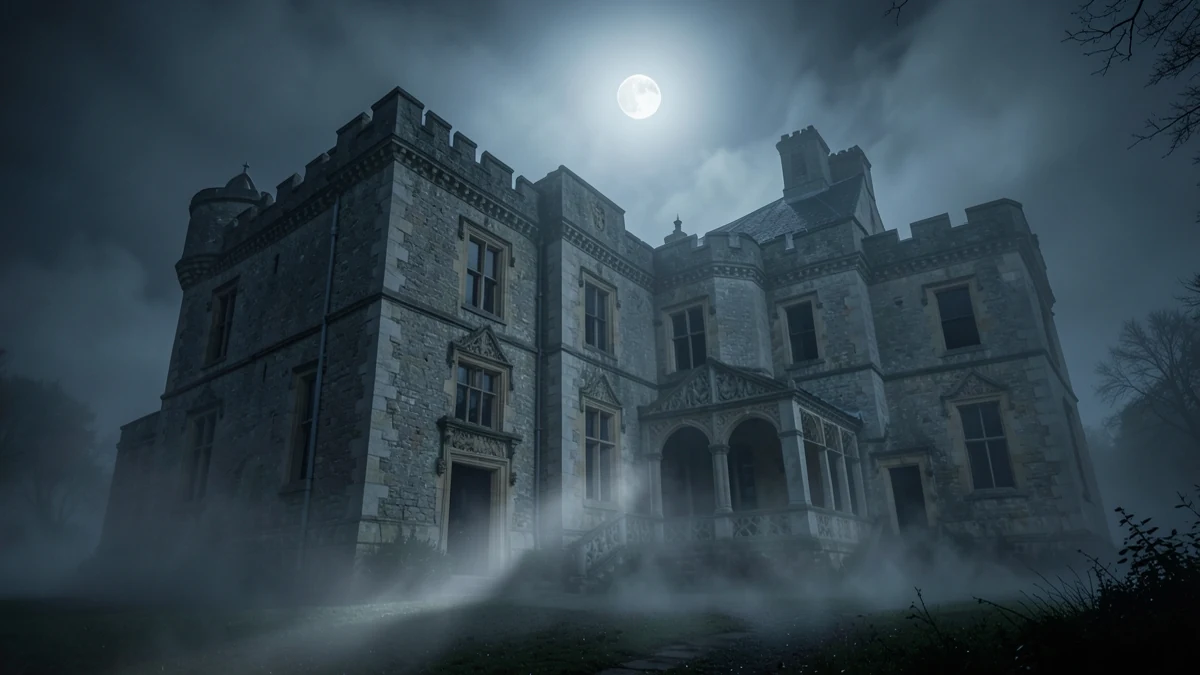
Lists of the most haunted places in the world often turn folklore into fact. A ghost is reported, copied from one website to another, and eventually described as a verified resident. The real places deserve better. Castles, prisons, hotels, cemeteries and private homes accumulate legends because they already contain powerful histories: violence, isolation, illness, political power, theatrical architecture and generations of visitors expecting an encounter.
The fifteen locations below are geographically varied and historically substantial. For each, documented history is separated from legend or reported paranormal claims. No ghost story is presented as proof. Some traditions have several versions, and absence of evidence should not be confused with evidence that a witness lied. Human perception, memory and culture are complicated—as the psychology of feeling watched helps explain.
1. Tower of London, England
Documented history: William the Conqueror began the White Tower in the late eleventh century. The fortress became a royal residence, armory, treasury, menagerie, mint and prison. High-status prisoners were held and sometimes executed within or near the complex. Anne Boleyn was executed on Tower Green in 1536; Lady Jane Grey followed in 1554. The Crown Jewels are housed there today under Historic Royal Palaces.
Legend and reported claims: Anne Boleyn is the Tower’s most famous ghost, reportedly seen near the chapel or carrying her head. Stories also attach apparitions to Lady Jane Grey, the “Princes in the Tower” and a spectral bear. These tales developed across centuries and are not verified records of supernatural events. The ravens belong to another legend: Britain is said to fall if they leave, a tradition whose popular form is much more recent than the medieval fortress.
2. Edinburgh Castle, Scotland
Documented history: Edinburgh Castle stands on volcanic rock above the Scottish capital. The site has a long military and royal history, including sieges during conflicts over the Scottish crown and later use as a garrison and prison. The castle holds Scotland’s crown jewels and the Stone of Destiny.
Legend and reported claims: Visitors and staff have reported footsteps, music and figures in old passages. One tale tells of a piper sent into tunnels beneath the Royal Mile whose music stopped and who never returned. The story is folklore; no documentary record confirms such an expedition. Underground spaces, crowds, wind and centuries of violent history provide fertile conditions for expectation.
3. Leap Castle, Ireland
Documented history: Leap Castle in County Offaly developed over several centuries and is associated with the O’Bannon and O’Carroll families. Its history includes clan conflict, changes of ownership and damage during the Irish Civil War. A small chamber discovered near the chapel contained human remains, though retellings vary about how many and when they were placed there.
Legend and reported claims: The “Bloody Chapel” is linked to a story in which one O’Carroll killed a priestly brother during Mass. Another legend describes an elemental spirit with a disturbing odor and animal-like face. The precise historical basis for these stories is uncertain. Modern haunted reputation owes much to storytelling, media and the castle’s dramatic fabric.
4. Château de Brissac, France
Documented history: The Château de Brissac in the Loire Valley evolved from a medieval fortress into a tall Renaissance residence and remains associated with the ducal family of Brissac. Its rooms, theater and seven-story silhouette make it one of France’s most striking inhabited châteaux.
Legend and reported claims: The “Green Lady” is identified in legend as Charlotte de Brézé, allegedly murdered with her lover by her husband in the fifteenth century. The story’s details have been embroidered, and the apparition’s green dress or disfigured face belongs to later folklore. Visitors report sightings and sounds, but the château presents the tale as legend rather than judicial proof of a haunting.
5. Dragsholm Castle, Denmark
Documented history: Dragsholm began as a medieval ecclesiastical stronghold, became crown property after the Reformation and served at times as a prison for noble captives. James Hepburn, Earl of Bothwell and third husband of Mary, Queen of Scots, was imprisoned there and died in 1578. The building later became a Baroque manor and now operates as a hotel and restaurant.
Legend and reported claims: Stories describe a Grey Lady, a White Lady and the ghost of Bothwell. The White Lady is often said to be a nobleman’s daughter confined for loving a commoner; a skeleton found during twentieth-century building work was later attached to the tale. The discovery of remains does not verify the identity or apparition.
6. Bhangarh Fort, India
Documented history: Bhangarh in Rajasthan was founded in the sixteenth century under the Kachwaha rulers. Its ruined temples, markets, palaces and houses sit within a fortified landscape. Political change, conflict, resource pressures and shifting settlement patterns provide historical explanations for decline, though popular accounts often simplify the abandonment.
Legend and reported claims: One famous story blames a curse by a holy man whose condition about shadows was broken; another tells of a magician whose rejected desire for a princess doomed the town. The Archaeological Survey of India’s site rules are often misrepresented online as proof that paranormal activity is officially confirmed. Restrictions around protected ruins after dark are ordinary safety and conservation measures, not a scientific declaration of ghosts.
7. Himeji Castle, Japan
Documented history: Himeji Castle in Hyōgo Prefecture is a UNESCO World Heritage site and one of Japan’s best-preserved castle complexes. Its white plastered defenses, layered routes and seventeenth-century form survive when many other castles were destroyed or rebuilt.
Legend and reported claims: Okiku’s Well is linked to the tale of a servant falsely accused of losing a valuable plate, killed and thrown into a well. Her ghost is said to count plates and cry out at the missing one. Versions of Okiku’s story appear in different places and theatrical traditions, including Banchō Sarayashiki. The legend is culturally important but cannot be treated as a confirmed castle murder report.
8. Lawang Sewu, Indonesia
Documented history: Lawang Sewu—“Thousand Doors”—was built in Semarang in the early twentieth century as an office of the Dutch East Indies Railway Company. During the Japanese occupation, parts of the complex were used by the military, and fighting occurred nearby during the Battle of Semarang in 1945. The restored building is now a museum and landmark.
Legend and reported claims: Stories describe a Dutch woman, headless figures and presences in basement areas associated in popular memory with wartime detention. Television programs intensified the haunted reputation. The occupation and battle are documented; specific ghost identities and many claims about executions inside particular rooms are not established by comparable evidence.
9. Monte Cristo Homestead, Australia
Documented history: The Monte Cristo Homestead was built near Junee, New South Wales, in the 1880s for Christopher William Crawley and his family, who became prosperous through local enterprise. Deaths and accidents occurred on or around the property over time, as they did on many large working estates, and later owners developed the building as a heritage attraction.
Legend and reported claims: The house is promoted as one of Australia’s most haunted. Reported figures include Mrs. Crawley, a maid and a stable worker, with stories involving lights, voices and cold spots. Some popular accounts combine documented deaths with details that are difficult to verify. The attraction’s identity and tourism are now inseparable from its ghost narrative.
10. Castle of Good Hope, South Africa
Documented history: The Dutch East India Company built the Castle of Good Hope in Cape Town during the seventeenth century, replacing an earlier fort. It functioned as a military, administrative and judicial center within a colonial system built through conquest, enslavement and coercion. Punishment and imprisonment occurred there.
Legend and reported claims: Legends include a tall figure walking the ramparts, a bell ringing without a visible cause and the ghost of Governor Pieter Gysbert van Noodt, who died in 1729 after a disputed execution story. The colonial violence is historical fact; individual apparitions and moralized accounts of van Noodt’s death belong to folklore.
11. Island of the Dolls, Mexico
Documented history: The Island of the Dolls lies among the chinampas of Xochimilco, Mexico City. In the twentieth century, caretaker Don Julián Santana Barrera hung dolls and doll parts around the island. Accounts agree on his role but differ on when and why the practice began. He died in 2001.
Legend and reported claims: The best-known story says Santana found a drowned girl’s body and began hanging dolls to calm her spirit. Some relatives and journalists have questioned parts of that account. Visitors report eyes moving, whispers and dolls changing position. Weather, animals, decay and suggestion provide ordinary possibilities; the site’s emotional power comes from hundreds of human-like objects aging in a wet landscape.
12. Eastern State Penitentiary, United States
Documented history: Eastern State Penitentiary opened in Philadelphia in 1829 and became a model for a system based on isolation and penitence. Its radial design influenced prisons internationally. Extended solitary confinement produced severe psychological suffering, and the institution later shifted practices before closing in 1971. It now operates as a historic site confronting mass incarceration and prison history.
Legend and reported claims: Shadow figures, footsteps and voices are widely reported, and seasonal haunted attractions have amplified the association. The prison’s documented suffering makes a haunted interpretation emotionally intuitive, but no paranormal claim is necessary to understand why cells and isolation corridors produce unease. The site’s responsible history programming separates entertainment events from the record of incarceration.
13. The Stanley Hotel, United States
Documented history: Freelan Oscar Stanley opened the Stanley Hotel in Estes Park, Colorado, in 1909 as a resort with modern comforts. Stephen King stayed there in 1974 near the end of the season; the nearly empty hotel helped inspire his novel The Shining. Stanley Kubrick’s film used a different exterior, while a later television adaptation filmed at the hotel.
Legend and reported claims: Guests report piano music, children in hallways, moved objects and apparitions associated with F. O. and Flora Stanley. Room 217 carries particular fame, partly because of a documented 1911 gas explosion that injured a housekeeper. The hotel’s literary connection and ghost tours reinforce expectations. Inspiration for fiction is documented; supernatural residents are not.
14. La Recoleta Cemetery, Argentina
Documented history: Recoleta Cemetery in Buenos Aires contains elaborate mausoleums and the graves of political leaders, artists, military figures and prominent families, including Eva Perón. Its lanes form a dense city of stone shaped by nineteenth- and twentieth-century ideas about status, mourning and national memory.
Legend and reported claims: The best-known ghost story concerns Rufina Cambaceres, who died in 1902 at age nineteen and was later rumored to have been buried alive. Variants claim her coffin was found disturbed. Contemporary documentation supports her death and burial but not the dramatic legend in its popular form. A statue of Rufina touching a crypt door has helped the story endure.
15. Hoia-Baciu Forest, Romania
Documented history: Hoia-Baciu is a forest near Cluj-Napoca used for recreation and known for unusually shaped trees in some areas. Its international reputation grew in the later twentieth century through photographs, reports of unidentified aerial phenomena and paranormal tourism.
Legend and reported claims: Visitors describe lights, missing time, nausea, voices and a circular clearing where vegetation behaves differently. A shepherd and flock are sometimes said to have vanished, but reliable historical documentation for the story is elusive. Soil, plant competition, disease, human disturbance and expectation offer researchable questions; no evidence establishes the forest as a supernatural portal.
Why these stories attach to places
Haunted legends rarely choose blank spaces. They attach to architecture that controls movement: narrow stairs, wells, cells, ramparts, basements and long corridors. Old buildings produce drafts, echoes, vibrations and changing light. Visitors arrive knowing the story and scan for confirmation.
History adds moral pressure. A prison, colonial fort or execution site contains real suffering. Ghost stories may function as imperfect public memory, insisting that violence has not vanished merely because institutions changed. But folklore can also distort—turning victims into entertainment, inventing crimes and replacing complex history with a single dramatic death.
The psychology of horror explains why a safe visit can be enjoyable. A building supplies real sensory uncertainty while a tour supplies boundaries. The visitor moves between bodily alarm and social reassurance.
Visiting responsibly
Many locations are museums, hotels, protected monuments, cemeteries or private property. Visitors should follow access hours, avoid trespass, respect graves and religious sites, and never treat structural hazards as part of the thrill. Night restrictions are usually about safety, conservation and staffing.
Responsible tourism also means asking who controls the story. At sites connected with colonialism, imprisonment or execution, historical interpretation should not be reduced to ghost merchandise. A skeptical visitor can enjoy folklore while learning the documented record; a believer can value a tradition without presenting every detail as proven.
The most compelling haunted places do not need certified ghosts. Their walls have carried ambition, confinement, grief, faith, art and political power. Legends are one way people express the feeling that such histories remain present.
The stories become richer, not poorer, when we know where evidence ends.
Sources & Further Reading
- Tower of London history, Historic Royal Palaces
- Edinburgh Castle history, Historic Environment Scotland
- Himeji Castle, UNESCO World Heritage Centre
- Bhangarh protected monument information, Archaeological Survey of India
- Eastern State Penitentiary history, Eastern State Penitentiary Historic Site


