
Why The Odyssey Is Suddenly Everywhere Again in 2026
The Odyssey is popular again in 2026 after a major film, surging book demand and new reading communities reopened Homer's ancient journey home anew.
By Wajeeha Iqbal
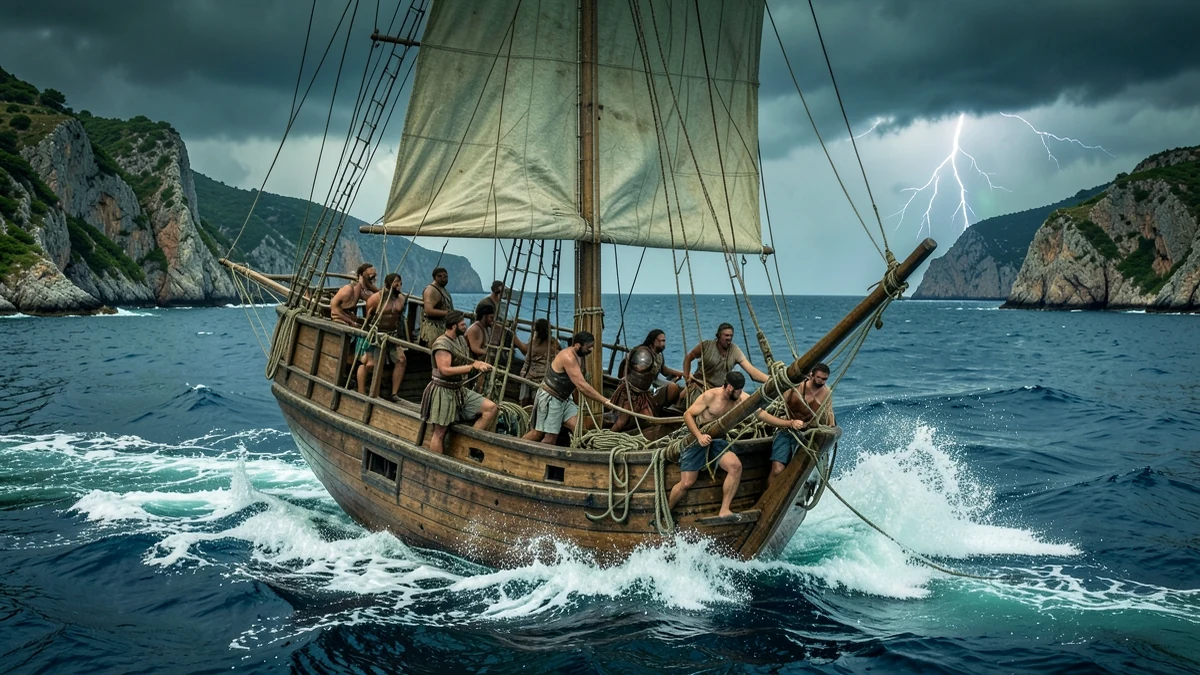
In 2026, The Odyssey is suddenly visible in cinemas, bookshops, libraries and reading groups far beyond the classrooms where many people first encountered Homer. Christopher Nolan’s film adaptation opened on 17 July and became a global box-office event. Publishers reported stronger sales, and public libraries in several American cities found their copies accumulating long waiting lists.
The film explains the timing, but not the whole phenomenon. Adaptations create attention; they do not automatically make a 2,700-year-old poem feel alive. The Odyssey has returned because it is unusually good at being returned to. It offers monsters and storms, but also a difficult homecoming, a family shaped by absence, a hero who survives through intelligence and deception, and a question that modern readers recognize: after a long crisis, can a person return home without bringing the crisis inside?
A work built before the modern book
The Odyssey emerged from an ancient Greek oral tradition and was composed in a culture where epic poetry was performed, remembered and reshaped. The name Homer identifies the poet associated with The Iliad and The Odyssey, but scholars have debated for centuries how the poems took form and what role individual authorship played.
That history matters because the work was never a sealed modern novel. Its repeated phrases, formal speeches and embedded stories helped performance and memory. Episodes can feel both connected and self-contained: the Cyclops, Circe, the Sirens, the descent to the dead, the recognition scenes in Ithaca. The structure made the epic portable across audiences long before printing.
Translation extends that process. Every English version makes choices about rhythm, names, tone and the social world of the poem. Readers arguing over which translation to choose are not standing outside the tradition; they are participating in its long history of mediation.
The 2026 screen event
Universal Pictures described Nolan’s The Odyssey as a mythic action epic shot around the world with new IMAX film technology. Its starry cast and large-scale release turned an ancient title into a contemporary cultural event. The film opened on 17 July 2026 and, according to the studio, delivered the biggest opening weekend of Nolan’s career. By 9 August, the Associated Press reported that its global total had reached about $1.1 billion.
Box-office numbers do not measure fidelity to Homer or the depth of reading. They do measure reach. Millions of people who had never planned to read an archaic Greek epic suddenly had a reason to ask what the original contains, what the film changed and why certain famous episodes mattered.
This is a familiar adaptation effect. A screen version reduces the social cost of beginning an old book. The title appears in conversation; tables of editions appear in shops; friends form reading plans; explainers circulate. Curiosity becomes communal rather than solitary.
Book sales and library queues
The revival was visible before release. Publishers Weekly, citing Circana BookScan, reported that U.S. sales of The Odyssey grew 42 percent in 2025 compared with 2024 after the film was announced. In 2026, publishers promoted multiple translations and formats to readers who wanted to finish before seeing the adaptation—or compare afterward.
Libraries offered another signal. Reporting from Columbus and Philadelphia described long holds for available editions after the film opened. A queue at one library is not a global reading census, but the pattern shows demand reaching beyond collectors who purchase new books.
The Library of Congress used the moment to display centuries of Odyssey history in its collections, from early printed translations to later works inspired by Homer. That institutional response captured why the trend has depth: the 2026 film is not replacing an old poem. It is joining a record of artists who have made the poem newly visible in their own medium.
Why adaptations revive old books
A successful adaptation supplies images, voices and a schedule. A book that once seemed culturally distant becomes attached to recognizable actors, trailers and a release date. Marketing repeats names until they become familiar: Odysseus, Penelope, Telemachus. Readers approach the page with a map of expectations.
Adaptations also produce disagreement, one of the strongest engines of reading. Viewers want to know whether an episode was “really” in Homer. Readers debate characterization, omitted scenes and the morality of the hero. People who would not attend a lecture will investigate a controversy.
The relationship is not a contest in which a faithful film defeats an unfaithful one. An ancient epic and a modern feature film have different structures, audiences and ethical assumptions. Comparison becomes fruitful when it reveals those differences rather than treating the source as a checklist.
A journey that keeps changing meaning
At the simplest level, The Odyssey is about a veteran trying to return to Ithaca after the Trojan War. The return takes ten years. Odysseus encounters divine hostility, temptation, imprisonment, hospitality and violence. At home, Penelope and Telemachus live with uncertainty while suitors consume the household’s resources.
For one reader, this is adventure. For another, it is a story of migration and delayed return. A veteran may notice the difficulty of leaving war. A child of an absent parent may read Telemachus differently. A reader interested in power may focus on servants, enslaved people and those who pay for the hero’s restoration.
The poem lasts because it does not give every generation the same answer. Home is a destination and a problem. Odysseus longs for Ithaca but repeatedly withholds his identity when he arrives. Recognition has to be tested. The person who returns is not identical to the one who left.
Identity, disguise and the modern self
Odysseus survives partly by controlling information. He tells stories, takes false names and reads the intentions of hosts and enemies. His famous cleverness can look like intelligence, manipulation or both. In a digital culture where people manage profiles and perform versions of themselves, that flexibility feels unexpectedly modern.
The poem asks whether identity rests in a name, memory, body, family or social role. Odysseus is recognized through different signs: a scar, a bow, knowledge of a bed built around a living tree. Each recognition belongs to a relationship. No public announcement is enough.
That is one reason the epic resists a purely heroic summary. Its deepest moments are domestic and private. The great traveler becomes himself through what only certain people know.
Temptation and the cost of delay
The journey is full of offers that would stop time: comfort with Circe, immortality with Calypso, forgetfulness among the Lotus-Eaters. The Sirens offer knowledge at the cost of destruction. These episodes remain compelling because temptation is not merely pleasure. It is relief from responsibility.
Modern audiences understand distraction as an economy. Endless media can make delay feel like movement. The Odyssey turns that experience into islands: each pause contains something desirable, and each threatens the long project of return.
Odysseus is not a simple model of self-control. His curiosity and pride produce danger, most famously after escaping the Cyclops. The journey lasts partly because the hero contributes to his own difficulty. That mixture of resilience and error gives the story more life than a flawless protagonist could.
Penelope, Telemachus and the people who wait
Popular summaries often make The Odyssey a man’s sea voyage, but much of its emotional architecture is built in Ithaca. Telemachus grows under the pressure of an absent father and an occupied household. Penelope navigates demands from powerful men while preserving uncertainty through intelligence of her own.
Modern translations and criticism have helped readers attend to characters once treated as background. The poem’s women, enslaved people and defeated enemies raise questions about who receives sympathy and whose violence is normalized. Reading the epic today does not require pretending that its social order matches ours. It invites a conversation across the distance.
The film revival has widened that conversation. Reading groups can admire the poem’s craft while challenging its hierarchy. A classic survives not because it is protected from criticism, but because it can endure serious criticism and still generate meaning.
Reading communities make difficulty social
The growth of online reading communities has changed how classics trend. People post translation comparisons, reading schedules, maps, pronunciation help and reactions to individual books of the poem. A difficult text becomes a series of manageable public steps.
Some readers choose audio because epic poetry began in performance. Others pair the poem with summaries or lectures. Many move between translations rather than seeking a single definitive version. These practices weaken the old assumption that “real” reading must be isolated and unsupported.
The wider return of classic books follows the same pattern. Social media is usually blamed for shortening attention, yet it can also coordinate long attention. A thirty-second video may lead someone into a work that takes weeks.
Which Odyssey should a new reader choose?
There is no universally best translation. Some preserve a formal or elevated sound; others emphasize speed, clarity or poetic pattern. Versions also differ in how they translate social status, repeated epithets and morally difficult scenes.
A practical approach is to read sample pages from several editions. Consider whether notes are helpful, whether the rhythm invites reading aloud and whether the language feels vivid enough to continue. A public-domain translation is freely available, while modern translations remain copyrighted and should be purchased or borrowed rather than reproduced.
Readers need not master Greek mythology before beginning. The poem itself teaches its world through repetition and story. A brief guide can help, but excessive preparation risks turning the journey into a test.
Why a very old story can trend
Trends are usually associated with novelty. The Odyssey shows that attention can also be a form of rediscovery. A work may wait in cultural memory until a new translation, adaptation or conversation makes it newly available.
The 2026 surge has a clear catalyst: a film on an enormous scale. Yet the response belongs to Homer because the source offers more than recognizable intellectual property. It contains the pleasure of monsters and escape, the ache of a family suspended in time, and the unsettling truth that survival can make return more complicated.
Soon the film will leave premium screens and the sales tables will change. The poem will remain where it has remained for centuries: in translation, performance, argument and the imagination of people who wonder what home means after the world has remade them.
That is why The Odyssey is everywhere again. It was never entirely gone.
Sources & Further Reading
- Official film information and release date, Universal Pictures
- The film’s opening-weekend results, NBCUniversal
- The Odyssey gets a sales boost ahead of the adaptation, Publishers Weekly, citing Circana BookScan
- Two thousand years of The Odyssey at the Library, Library of Congress


