
Why Do Humans Enjoy Being Scared? The Psychology of Horror
The psychology of horror explains why safe fear can feel thrilling: arousal, anticipation, curiosity, control and social bonding all shape enjoyment.
By Wajeeha Iqbal
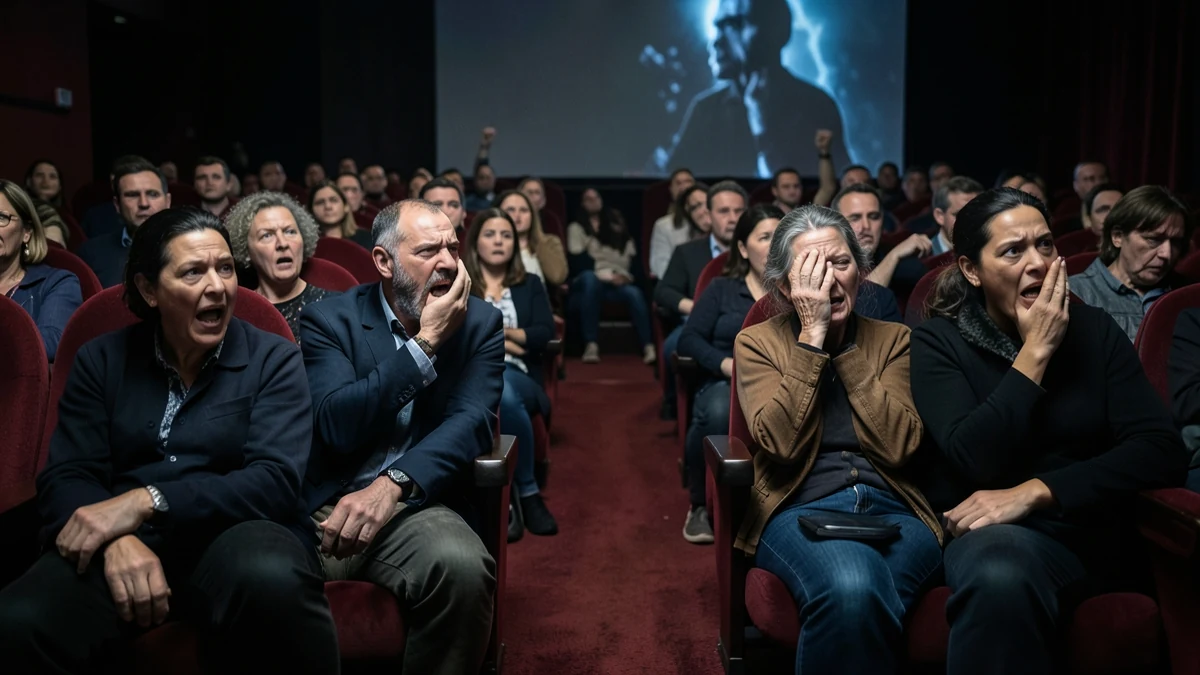
The psychology of horror begins with a paradox: fear evolved to help organisms avoid danger, yet people buy tickets to haunted houses, turn off the lights for frightening films and exchange ghost stories for pleasure. The answer is not that horror fans mistake danger for safety or enjoy suffering. Recreational fear works because the body can respond to a simulated threat while the person retains some knowledge, choice or control.
That balance is delicate. The same scene that thrills one viewer may overwhelm another. Enjoyment depends on intensity, context, personality, experience and whether participation is voluntary. Horror does not reveal who is brave; it reveals how differently people regulate arousal and meaning.
The fear response prepares action
When the brain detects a possible threat, it rapidly coordinates attention and bodily readiness. Heart rate may increase, breathing changes, muscles tense and sensory processing narrows toward relevant cues. The sympathetic nervous system and stress hormones help prepare escape, defense or freezing.
Popular explanations often reduce fear to the amygdala as an “alarm center.” The amygdala is important in threat learning and detection, but fear is produced by networks involving perception, memory, body regulation and decision-making. A sudden shape in darkness becomes frightening partly because the brain combines incomplete sensory information with expectations.
In genuine danger, that response is costly but potentially lifesaving. In horror entertainment, many of the same sensations occur without the same consequence. A racing heart can be interpreted as terror, excitement or both.
Safety changes the meaning of arousal
A person watching a film knows on some level that the threat is contained by a screen. A haunted-attraction visitor knows there are exits, staff and rules. That “protective frame” allows fear to become play.
The knowledge of safety does not cancel the body’s response. Music, darkness, sudden movement and human-like threats can work faster than deliberate reasoning. Pleasure arises in the movement between systems: the body says “danger,” while context says “I chose this and can leave.”
If the protective frame breaks—because a performer crosses a boundary, a viewer has a traumatic association or escape feels impossible—the experience can stop being recreational. Consent and control are therefore psychological ingredients, not administrative details.
Arousal has a sweet spot
Researchers studying visitors to a Danish haunted attraction found that enjoyment did not rise endlessly with fear. Instead, the relationship resembled an inverted U: too little fear was boring, too much reduced enjoyment, and an intermediate level was often most pleasurable. Physiological arousal showed a related pattern.
This helps explain why horror uses pacing. Continuous maximal noise becomes exhausting and predictable. Quiet allows arousal to fall just enough for uncertainty to rebuild it. The audience needs variation—approach, scare, relief and anticipation of the next approach.
The sweet spot differs by person. Experienced horror viewers may need novelty or complexity; someone sensitive to suspense may reach an enjoyable limit with very little visible violence. Good horror is not objectively “scarier” because it produces the largest reaction.
Anticipation can be stronger than the monster
Fear is a prediction emotion. A closed door, empty corridor or interrupted sound invites the brain to simulate what could happen. Uncertainty keeps several possibilities alive, and attention searches for evidence.
Filmmakers control this through framing, sound and timing. A space outside the camera’s view becomes psychologically active. Music suggests an approaching event; silence removes guidance. A jump scare delivers a brief reflex, but suspense recruits imagination for longer.
The eventual reveal can be less frightening than the period before it. Once the threat has a shape and rules, it becomes a problem. This is why some horror stories preserve ambiguity and why explaining a monster too fully can reduce its power.
Relief is part of the pleasure
Horror enjoyment is often strongest after tension resolves. The body remains activated while the mind receives evidence of safety. That contrast can feel like exhilaration. The final defeat of a threat, escape from a maze or return of the lights gives arousal a positive interpretation.
Even bleak horror can provide smaller cycles of relief: a character survives a scene, a joke interrupts tension, or the viewer looks at a friend. The pleasure need not depend on a happy ending. It can come from enduring intensity, appreciating craft or reaching narrative completion.
This is one reason a frightening experience may be remembered fondly. Memory includes not just fear at the peak but mastery and relief afterward.
Curiosity draws us toward forbidden knowledge
Humans are curious about threats. Information about predators, disease, violence and betrayal has survival value, but curiosity also extends to death, taboo and the unknown. Horror gives those subjects narrative form.
A story can ask what a person would do under pressure, what society hides, or what happens when familiar rules fail. The monster often embodies anxieties that are difficult to discuss directly: contagion, invasion, grief, technology, family violence or loss of control.
Audiences do not need to decode one official metaphor. A vampire may be erotic to one generation, diseased to another and aristocratic to a third. Horror’s flexibility allows private fear to become shared imagery.
Stories turn fear into structure
Real danger is chaotic and morally indifferent. Horror fiction gives it boundaries: a beginning, clues, rules and often a confrontation. Even when the ending is unresolved, the audience has spent time examining fear from a position of relative safety.
That structure can create a sense of competence. Viewers predict who should not enter the basement or notice the detail a character misses. Haunted attractions make the competence physical: move forward, regulate breathing, keep track of companions.
This should not be confused with exposure therapy, a clinical treatment conducted for specific fears in a planned safe environment. Watching horror may help some people practice arousal, but it is not a universal treatment and should not be prescribed casually.
Fear can be social glue
People often watch horror together. Shared arousal makes others’ reactions more noticeable: a hand grabbed, a synchronized scream, laughter after a scare. The group repeatedly confirms safety for its members.
Storytelling itself has long been social. A frightening tale around a fire or in a dark room concentrates attention on the speaker and reinforces common knowledge about dangerous places, forbidden actions or community history. Modern cinemas reproduce some of that collective rhythm.
Social bonding is not guaranteed. Teasing someone who is genuinely distressed can damage trust. The bonding effect depends on mutual choice and care—being scared with people, not by them against their will.
Personality and experience matter
Sensation seeking is associated with enjoyment of intense or novel experiences, and it can help explain why some people pursue stronger horror. Empathy, disgust sensitivity, anxiety, age, cultural learning and familiarity with the genre also influence response.
Fans learn conventions. They recognize music cues, camera positions and monster rules, which can create pleasure through anticipation rather than surprise. Expertise may make a film less frightening but more enjoyable as craft. Other viewers prefer supernatural dread, psychological uncertainty or gothic atmosphere to gore.
No single personality “type” explains horror fans. Research reviews find mixed results across methods and audiences. Preference is a relationship between a person and a particular form of horror, not a fixed measurement of character.
Why some people dislike horror
For some viewers, the fear remains unpleasant even when fictional. Images may intrude later, disrupt sleep or connect with personal experience. High disgust sensitivity can make bodily horror difficult. Uncertainty may feel exhausting rather than exciting.
Others object to the values of a work: cruelty, sexualized violence, stereotypes or suffering presented as entertainment. Disliking horror can be an aesthetic or moral judgment, not fearfulness.
Children’s ability to distinguish representation from reality develops gradually, and content appropriate for one age or child may not be suitable for another. Adults also deserve control over what they see. Surprise exposure is not a fair test of courage.
Entertainment fear versus genuine danger
Recreational fear is bounded, chosen and reversible. Genuine danger removes those protections. A real stalker, war, assault or disaster does not become enjoyable through adrenaline. The person lacks control and faces actual harm.
This distinction matters when discussing the feeling of being watched or visits to places with haunted reputations. A safe tour may use atmosphere as play; an isolated building with structural hazards is not safe because the visitor seeks a thrill.
Horror borrows the body’s emergency system but transforms it through art and context. It lets people approach the edge, study what frightens them and return. The return is the essential part.
We enjoy being scared when fear remains intense enough to feel real and framed enough to remain ours. Horror’s craft lies in keeping both truths alive at once.
Sources & Further Reading
- Playing With Fear: A Field Study in Recreational Horror, Psychological Science
- A review of empirical research on responses to horror films, Frontiers in Psychology
- What is exposure therapy?, American Psychological Association


